Category:
BitcoinBitcoin Treasury Returns to Profit Above $75,385

The cryptocurrency market witnessed a significant milestone recently when a major Bitcoin-holding company's digital asset portfolio briefly returned to profitability. This development underscores the volatile yet potentially rewarding nature of institutional cryptocurrency investments and highlights the strategic importance of average acquisition costs in the digital asset space. 🚀
Understanding Bitcoin Treasury Profitability 💰
When institutional investors hold substantial Bitcoin positions, their profitability hinges on a critical threshold: the average acquisition price. For companies managing large cryptocurrency treasuries, this break-even point becomes a closely watched metric that influences market sentiment and investor confidence.
The company in question holds approximately 840,447 Bitcoin acquired for $63.36 billion, translating to an average purchase price of $75,385 per coin when including all acquisition expenses. This massive position represents one of the largest corporate Bitcoin holdings globally, making its profitability status a bellwether for institutional cryptocurrency adoption.
The August Rally: A Return to Profitability 📈
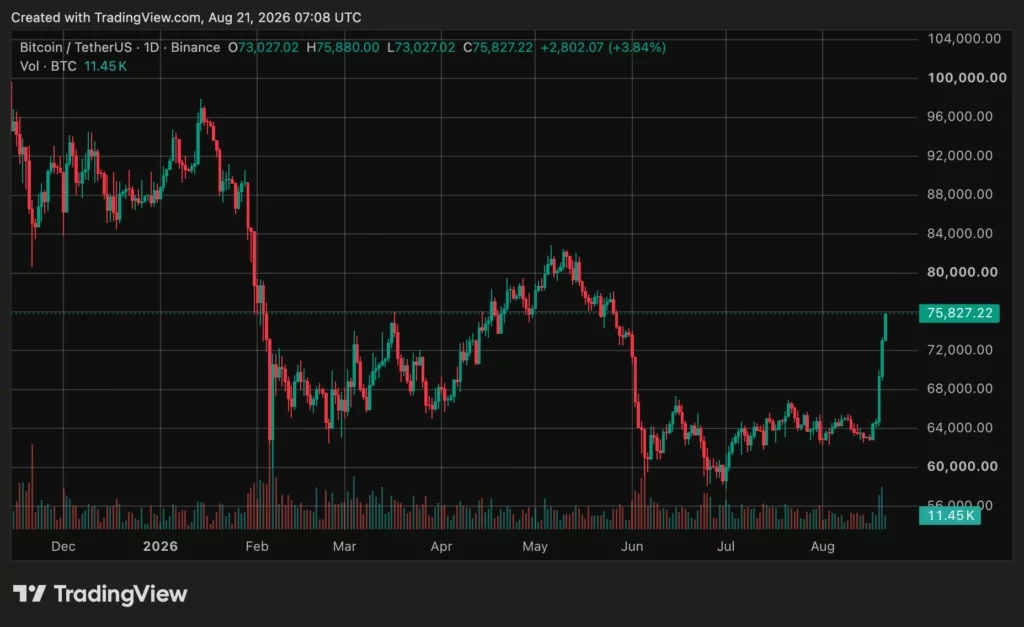
On August 21, Bitcoin experienced a robust 8.5% daily surge, climbing above the $75,385 average acquisition price threshold for the first time since recent market corrections. During this rally, Bitcoin briefly touched approximately $75,613, creating an estimated unrealized gain of roughly $191.6 million for the treasury position.
This movement demonstrates the mathematical reality of cryptocurrency holdings: each $1,000 fluctuation in Bitcoin's price changes the position's market value by approximately $840.4 million. Such sensitivity illustrates why institutional investors must carefully consider their entry points and maintain disciplined accumulation strategies.
The profitability snapshot, however, proved temporary. As market conditions shifted, Bitcoin retreated to around $75,500, reducing the unrealized gains to approximately $97.5 million. These fluctuations highlight a fundamental aspect of cryptocurrency investing: unrealized gains remain highly volatile and subject to rapid reversal.
Strategic Bitcoin Accumulation and Corporate Treasury Management 🎯
Understanding the broader context of this treasury's strategy reveals important insights about institutional Bitcoin investment approaches. The company previously held 847,363 Bitcoin at its June peak but has since reduced holdings through strategic sales.
During the summer months, the company executed several Bitcoin sales to support multiple corporate objectives:
- Preferred Share Payments: Maintaining dividend obligations to preferred shareholders
- Share Repurchases: Buying back approximately 1.15 million STRC preferred shares using $108.6 million from a 1,690 BTC sale
- Dollar Reserve Building: Strengthening cash positions for operational flexibility
- Capital Raising: Issuing $333.7 million in common shares during early August
These decisions reflect a sophisticated approach to treasury management that balances Bitcoin accumulation with corporate liquidity needs and shareholder obligations. Rather than pursuing a purely maximalist Bitcoin strategy, the company has demonstrated willingness to monetize gains for strategic purposes.
The Importance of Cost Basis in Bitcoin Treasury Analysis 📊
The $75,385 average acquisition price represents more than just a number—it's a strategic anchor point that influences decision-making across the organization. When Bitcoin trades above this level, it validates the accumulation strategy and creates psychological momentum. When it trades below, it tests the conviction of long-term holding strategies.
For institutional investors, understanding the distinction between unrealized gains and actual profits is crucial:
Unrealized Gains are paper profits that only materialize through actual sales or financing transactions. They don't provide immediate cash flow and remain subject to market volatility.
Accounting Treatment under current U.S. standards measures qualifying crypto assets at fair value, with changes flowing through earnings statements. This creates potential divergence between accounting results and simple market value comparisons.
Debt and Obligations must be considered alongside treasury gains. The company's balance sheet includes debt obligations, preferred stock commitments, and operational expenses that affect true net worth.
Comparative Analysis: Bitcoin vs. Ethereum Treasury Positions 🔄
While the Bitcoin treasury briefly returned to profitability, the cryptocurrency market includes other significant institutional positions with different trajectories. Another major crypto-focused company reported holding approximately 5.82 million Ethereum tokens, with about 5.07 million actively staked through validator networks.
With Ethereum trading near $2,371, this position faces a substantial headwind. Third-party analysts estimate an average acquisition cost around $3,366 per token, implying an unrealized loss of approximately $5.79 billion. For Ethereum to reach profitability at the reported cost basis, the token would need to appreciate roughly 42% from current levels.
This disparity between Bitcoin and Ethereum treasury performance highlights several important considerations:
- Market Cycle Differences: Bitcoin and Ethereum often move through different market phases
- Staking Rewards: Ethereum's staking mechanism generates ongoing revenue, with projections suggesting $250 million in annualized returns
- Acquisition Timing: Different entry points create vastly different profitability profiles
- Strategic Allocation: Institutional investors must balance between multiple digital assets
Forward-Looking Strategy and Market Expectations 🔮
Corporate leadership has signaled plans to resume Bitcoin accumulation during 2026, though specific timing and purchase amounts remain undisclosed. This forward guidance suggests confidence in Bitcoin's long-term value proposition despite near-term volatility.
The decision to pause accumulation during 2025 appears tactical, driven by the need to maintain liquidity, support shareholder obligations, and build cash reserves. This measured approach contrasts with more aggressive strategies that prioritize Bitcoin accumulation above all other considerations.
For investors monitoring these corporate treasuries, several key metrics warrant attention:
- Weekly SEC Filings: These disclosures reveal actual purchase, sale, and holding decisions
- Bitcoin Price Levels: The $75,385 threshold remains critical for profitability status
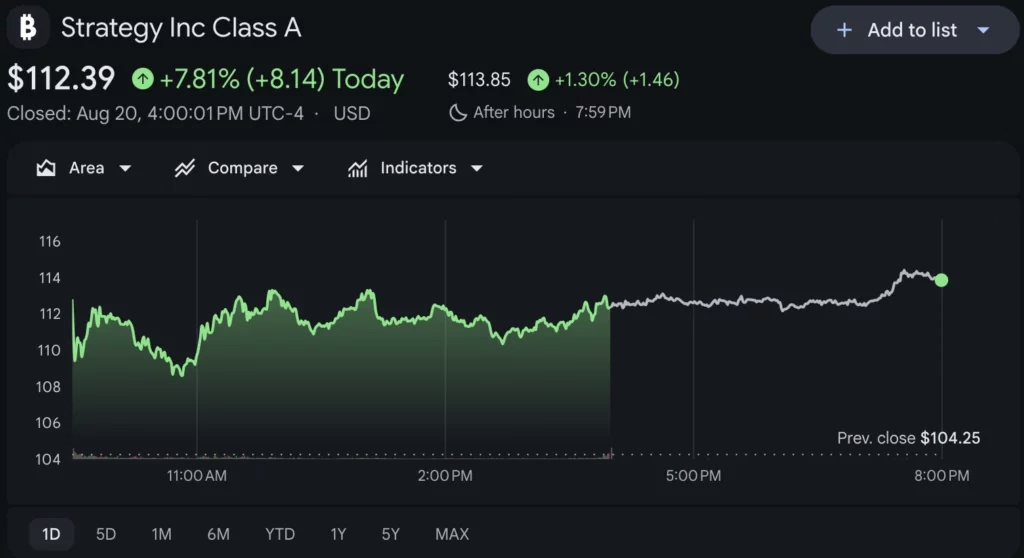
- Stock Performance: Corporate shares often diverge from Bitcoin due to dilution, financing costs, and preferred stock claims
- Staking Yields: For Ethereum positions, ongoing rewards gradually improve effective cost basis
Broader Implications for Institutional Crypto Adoption 🌐
These treasury positions represent a watershed moment in cryptocurrency's institutional adoption journey. Major corporations now hold digital assets comparable in scale to venture capital firms' entire portfolios. The profitability or loss of these positions influences not just shareholder returns but broader market sentiment regarding cryptocurrency viability.
The return to profitability, even temporarily, validates institutional investment theses that Bitcoin serves as a store of value and portfolio diversifier. Conversely, the persistent losses in Ethereum positions suggest that not all digital asset strategies perform equally.
Institutional investors continue evaluating cryptocurrency treasuries based on several factors:
- Volatility Management: Strategies for weathering significant price swings
- Regulatory Clarity: Evolving legal frameworks affecting treasury accounting and taxation
- Operational Efficiency: Costs associated with custody, security, and trading
- Alternative Uses: Opportunities like staking, lending, and collateralization
Key Takeaways and What's Next 🎬
The temporary return to profitability for a major Bitcoin treasury highlights several important realities about institutional cryptocurrency investment:
First, average acquisition cost matters enormously. The difference between profitability and losses often comes down to where and when assets were purchased. Institutional investors must carefully time accumulation and execute disciplined buying strategies.
Second, unrealized gains remain volatile and temporary. A brief rally above cost basis doesn't constitute a sustainable profit until assets are actually sold or used in financing transactions.
Third, treasury management requires balancing multiple objectives. Pure Bitcoin maximalism often conflicts with practical corporate needs like shareholder returns, operational liquidity, and financial flexibility.
Fourth, different digital assets perform differently. Bitcoin's return to profitability contrasts sharply with Ethereum's substantial unrealized losses, demonstrating that cryptocurrency portfolios require sophisticated allocation strategies.
As we move forward, institutional Bitcoin treasury positions will likely continue attracting significant attention from investors, regulators, and cryptocurrency advocates. The planned resumption of Bitcoin accumulation in 2026 suggests that despite short-term volatility, major institutions remain committed to cryptocurrency as a strategic asset class. Market participants should monitor upcoming SEC filings, Bitcoin price action above and below the $75,385 level, and broader developments in institutional crypto adoption to understand how these treasury positions evolve. ✨
The cryptocurrency market's maturation increasingly depends on how well-capitalized institutions manage their digital asset treasuries through market cycles. These corporate positions now serve as proxies for institutional confidence in Bitcoin and Ethereum, making their profitability status relevant far beyond individual company shareholders.
You May Also Like

Bitcoin
Bitcoin as Hedge Against $40T U.S. Debt Crisis
August 24, 2026

Bitcoin
Tether's $120M Uruguay Bitcoin Mining Exit: What Went Wrong
August 23, 2026

Bitcoin
Bitcoin as Reserve Currency: Escaping the Dollar's Monetary Trap
August 22, 2026

Bitcoin
Bitcoin ETF True Cost: Fees, Tracking Error & Real Returns
August 20, 2026