Category:
RegulationCLARITY Act Odds Drop to 25% as Trump Reviews Ethics Compromise

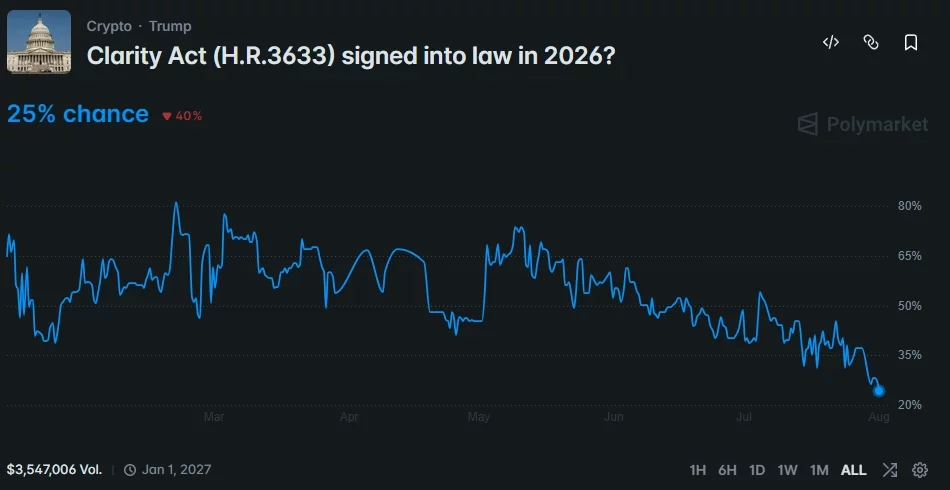
The cryptocurrency industry faces a critical juncture as legislative momentum for landmark digital asset regulation appears to be slowing. With prediction market traders currently assigning just a 25% probability to the CLARITY Act becoming law before the end of 2026, the bipartisan effort to establish federal crypto market structure hangs in the balance. This represents a significant decline from 30% odds earlier in the week, reflecting growing uncertainty about both ongoing negotiations and the compressed Senate calendar.
The Ethics Proposal That Could Change Everything 🔑
The central issue holding up the CLARITY Act's progress isn't disagreement over crypto regulation itself—it's the enforcement mechanisms embedded in the bill's ethics provisions. Republican Senator Thom Tillis and Democratic Senator Ruben Gallego have been quietly negotiating compromise language designed to break the legislative logjam. According to reports, they submitted their counterproposal to the White House on Thursday, introducing a framework that would give state attorneys general a meaningful role in enforcing restrictions on federal officials' digital asset activities.
This represents a significant shift from the earlier Republican-backed ethics language that Democrats had rejected outright. The previous version concentrated enforcement authority exclusively with federal prosecutors, a structure that raised concerns among Democratic senators about adequate oversight and conflict-of-interest protections. By incorporating state-level enforcement mechanisms, the revised proposal attempts to satisfy Democratic demands for stronger safeguards while maintaining Republican support for the broader legislative package.
Why Ethics Became the Dealbreaker 💼
The ethics dispute emerged as the defining battleground in CLARITY Act negotiations for a straightforward reason: it directly impacts how federal officials can interact with the digital asset ecosystem. The contested language would prohibit the president, vice president, and other federal officials from issuing or sponsoring digital assets while in office. Democrats insisted on robust enforcement mechanisms and broader protections addressing potential conflicts of interest stemming from officials' existing crypto business interests.
Senator Tillis had explicitly withheld his support for the broader bill until the ethics section received substantial revisions. His position as a key Republican voice on financial regulation gave him considerable leverage in these negotiations. The compromise framework now under White House review represents his attempt to thread the needle—strengthening enforcement protections without fundamentally restructuring the bill's approach to federal crypto oversight.
The White House Weighs In ⚪
Anthony Scaramucci, founder of SkyBridge Capital and a prominent figure in crypto policy discussions, has publicly stated his expectation that President Trump will approve the revised ethics language. "If POTUS ultimately signs off, which I think he will, who will stand in the way of Clarity?" Scaramucci wrote on social media. "If Dems (or GOPs in the pocket of bank lobby) stand in the way, they will regret it in November."
Scaramucci's assessment carries weight within industry circles, though neither Trump nor the White House has formally confirmed acceptance of the proposal. The administration's decision on the ethics compromise will likely prove decisive for the bill's immediate prospects. A presidential blessing could accelerate Senate floor proceedings, while rejection would virtually guarantee continued delay and further erosion of passage probability.
Scaramucci also claimed in a now-deleted social media post that Trump's children supported the compromise, though this assertion has not been independently verified by other sources. The statement underscores the personal and political dimensions of the CLARITY Act debate within the administration.
Beyond Ethics: Other Contentious Provisions 📋
While the ethics framework dominates current headlines, significant disagreements persist over other sections of the CLARITY Act. Senators remain divided on provisions involving stablecoin rewards structures, protections for blockchain developers, and perhaps most importantly, the division of regulatory authority between the Securities and Exchange Commission (SEC) and Commodity Futures Trading Commission (CFTC).
These jurisdictional questions represent longstanding tensions in crypto regulation:
- Stablecoin regulation: Debate continues over how stablecoins should be classified and which regulatory bodies should oversee their issuance and operation
- Developer protections: Questions remain about what legal safeguards blockchain developers should receive when building on open protocols
- SEC vs. CFTC authority: The fundamental question of which agency should regulate which digital assets remains unresolved
The House already demonstrated broader support for crypto legislation, passing its version of the CLARITY Act by a commanding 294–134 vote in July 2025. Notably, 78 Democrats voted in favor, suggesting meaningful cross-party consensus exists on the underlying regulatory framework. Any amended Senate version would still require approval from both chambers before reaching Trump's desk, adding another layer of procedural complexity.
The Prediction Market Perspective 📊
Polymarket traders have become an increasingly important barometer for legislative probability, translating their financial positions into real-time odds. The current 25% probability for CLARITY Act passage reflects traders' collective assessment of remaining obstacles and timing challenges. These prediction markets don't represent formal legislative forecasts; instead, they aggregate the distributed knowledge of participants with financial stakes in the outcome.
The odds can shift dramatically in response to new developments. A White House announcement supporting the ethics compromise could trigger immediate upward movement in probability. Conversely, Senate Majority Leader John Thune scheduling floor proceedings would signal serious movement toward a vote, potentially reversing the downward trend.
The Senate Calendar Crunch ⏰
Timing pressure adds urgency to these negotiations. The Senate faces a compressed legislative calendar with multiple competing priorities demanding floor time before the August recess. Nominations, government funding negotiations, and votes concerning Iran and Russia-Ukraine sanctions are all competing for limited legislative slots.
Senator Cynthia Lummis recently stated that Thune has reserved space for the CLARITY Act on the Senate agenda and still intends to begin considering it before lawmakers leave Washington. "Senator Thune has kept a place for the Clarity Act on the agenda before the August recess for many, many weeks now," Lummis said. "I believe he does intend to go through with it." However, her comments indicate proceedings could begin within days without guaranteeing a final passage vote before the recess.
Industry observers have noted that amendments and procedural votes could easily push final action into the post-recess calendar, where political dynamics might shift and momentum could dissipate.
Industry Pressure Mounting 🚀
Crypto companies and advocacy groups recognize the legislative window may be closing. Digital Currency Group, the parent company of Grayscale and a major player in the digital asset ecosystem, sent a formal letter to both Thune and Senate Minority Leader Chuck Schumer requesting a vote before the August recess. The company argued that continued regulatory uncertainty was driving US crypto investment and jobs overseas—a message designed to appeal to both parties' concerns about American competitiveness.
Treasury Secretary Scott Bessent added his voice to the chorus, issuing a similar call this week and stating that the Senate needed to vote on the legislation "now." When Treasury officials publicly advocate for specific legislation, it signals administration priority and can influence Senate scheduling decisions.
What's at Stake for the Crypto Industry 🎯
For US cryptocurrency companies and investors, the CLARITY Act's fate will determine whether Congress advances a federal division of SEC and CFTC oversight this summer or leaves the regulatory framework unresolved heading into the November elections. The distinction matters enormously. A clear federal framework would provide the certainty that institutional investors and established crypto companies have repeatedly cited as essential for growth.
Without legislative clarity, the regulatory landscape remains fragmented and unpredictable. State-level regulations diverge, agency interpretations conflict, and companies must navigate competing jurisdictional claims. This ambiguity has already contributed to crypto companies relocating operations overseas, taking American jobs and tax revenue with them.
Conversely, passage of the CLARITY Act would represent the most significant federal crypto legislation since the industry emerged. It would establish clear lines between SEC and CFTC authority, provide developer protections that could stimulate innovation, and create a stable foundation for institutional adoption.
The Path Forward 🛤️
The next few days will prove critical for the CLARITY Act's prospects. The White House's decision on the ethics compromise language will likely determine whether momentum accelerates or continues to decelerate. If the administration signals approval, Thune could schedule floor proceedings within days. If concerns emerge, negotiations could extend beyond the August recess, effectively reducing passage probability even further.
The 25% odds currently priced into prediction markets reflect genuine uncertainty about both the White House's position and Senate scheduling. However, these odds remain far from zero, suggesting meaningful possibility that legislators could still deliver crypto market structure legislation before the recess. The industry, administration officials, and key senators have all signaled their intent to move forward.
The CLARITY Act represents a rare moment of bipartisan consensus on crypto regulation. Whether Congress seizes this opportunity before procedural realities and competing priorities push it aside remains the defining question for the digital asset industry heading into fall.
Key Takeaways ✨
- Current odds sit at 25% for CLARITY Act passage by end of 2026, down from 30% earlier in the week
- Ethics compromise language submitted by Tillis and Gallego introduces state attorney general enforcement authority
- White House decision pending on whether to accept the revised ethics framework
- Senate calendar compressed with multiple competing priorities before August recess
- Bipartisan support exists for the underlying regulatory framework, as demonstrated by House vote
- Industry groups pressing lawmakers to vote before recess, citing competitive disadvantages
- Next few days critical for determining whether legislation moves forward or stalls into fall
You May Also Like

Regulation
SEC Regulation Crypto Assets: New Rules Explained
August 26, 2026

Regulation
Trump's CLARITY Act: Reshaping Crypto Regulation in America
August 24, 2026
Regulation
South Korea Strengthens Crypto Oversight with New FIU Investigation Powers
August 23, 2026

Regulation
Reg Crypto Framework: End of Token Legal Ambiguity
August 23, 2026