Category:
RegulationCoinbase and Ripple Lead White House Crypto Meeting

The High-Stakes August 19 White House Crypto Summit 🏛️
The cryptocurrency industry is preparing for a pivotal moment. On August 19, executives from some of the most influential blockchain companies will gather at the White House for a critical discussion on digital asset regulation. This meeting represents a rare opportunity for the crypto sector to directly influence regulatory policy at the highest levels of government.
Coinbase, Ripple, Andreessen Horowitz (a16z), Chainlink, Paradigm, and Kalshi have all been identified as expected participants in this landmark gathering. The convergence of these major players signals the significance of what's at stake—nothing less than how the United States will regulate cryptocurrencies for years to come.
Understanding the CLARITY Act 📋
The central focus of this White House meeting revolves around the Digital Asset Market Clarity Act, commonly known as the CLARITY Act. This groundbreaking legislation would fundamentally reshape how digital assets are regulated across the United States.
Here's what the CLARITY Act proposes:
- Regulatory Division: Spot markets for qualifying digital commodities would fall under Commodity Futures Trading Commission (CFTC) oversight, while assets classified as securities remain under Securities and Exchange Commission (SEC) authority
- Comprehensive Framework: Establishes federal requirements for exchanges, brokers, dealers, advisers, and digital asset custodians
- Consumer Protections: Creates standardized rules that apply uniformly across the industry
- Market Clarity: Eliminates ambiguity about which regulator oversees specific digital assets
For American investors, this distinction matters enormously. A token's regulatory classification determines where it can trade, what disclosures apply, and whether platforms must register with the SEC or comply with CFTC rules. Currently, this regulatory ambiguity has created significant friction in the market.
Why Coinbase and Ripple Are Leading the Charge 🚀
Coinbase CEO Brian Armstrong has been one of the most vocal advocates for the CLARITY Act. In a recent statement, Armstrong emphasized that "the momentum behind this technology keeps growing with or without a congressional calendar." This reflects a broader frustration within the industry about regulatory delays.
Ripple CEO Brad Garlinghouse has similarly championed the legislation, and both companies were part of a coalition of over 120 companies that urged lawmakers to advance the proposal in April 2026. These executives understand that regulatory clarity is essential for institutional adoption and consumer confidence.
Coinbase has raised specific concerns about provisions governing stablecoin rewards and decentralized finance protocols. Armstrong has pointed to three critical areas where activity can continue regardless of congressional timelines:
- Stablecoin Usage: Growing adoption of dollar-backed digital currencies
- Tokenized Assets: Real-world assets being converted into blockchain-based tokens
- Perpetual Futures: Derivative trading platforms serving sophisticated investors
The Regulatory Players at the Table 🤝
This isn't just a meeting between crypto companies and the White House. The gathering includes heavyweight regulators who will shape how these rules are implemented.
CFTC Chairman Michael Selig and SEC Chairman Paul Atkins are both expected to participate. Their presence is crucial because the CLARITY Act essentially redefines the boundary between their respective jurisdictions. Getting these regulators on board is essential for the legislation to succeed.
President Donald Trump may also attend with members of his administration, though the White House had not confirmed formal attendance at the time of initial reporting. Trump's involvement would signal strong executive branch support for the legislation.
The Senate Timeline: September 15 is Critical 📅
The CLARITY Act faces a procedural vote on September 15, 2026, just one day after senators return from their August recess. Senate Majority Leader John Thune filed cloture on the motion to proceed before the chamber's recess began, meaning the motion to begin formal debate will ripen at 2:15 p.m. on that date.
Understanding Senate procedure is key: This September vote is not a final passage vote. Instead, it's a cloture vote requiring at least 60 senators to support moving forward with debate. Here's the political reality:
- Republicans Cannot Act Alone: The GOP cannot reach 60 votes without Democratic support
- Bipartisan Support Needed: Even if most Republicans back the measure, Democratic votes are essential
- Recent Precedent: The House passed its version 294–134 in July 2025, with 78 Democrats joining Republicans
- Senate Progress: The Senate Banking Committee advanced its version 15–9 in May 2026, with Democratic Sens. Ruben Gallego and Angela Alsobrooks voting with Republicans
Unresolved Disagreements Threaten Passage ⚠️
Despite the industry's optimism, significant obstacles remain. Several contentious issues divide lawmakers:
- Political Ethics Provisions: Concerns about conflicts of interest in regulatory decisions
- Stablecoin Reward Rules: How interest paid on stablecoin holdings should be regulated
- Developer Protections: Whether software developers should face liability for protocol-level transactions
- Illicit Finance Controls: How strictly to monitor cryptocurrency transactions for money laundering
- Consumer Safeguards: What protections must exchanges provide to retail investors
The White House has not indicated whether the August 19 meeting will address these specific disagreements. However, resolving them will be essential before the bill can pass both chambers.
Prediction Markets Show Skepticism 📊
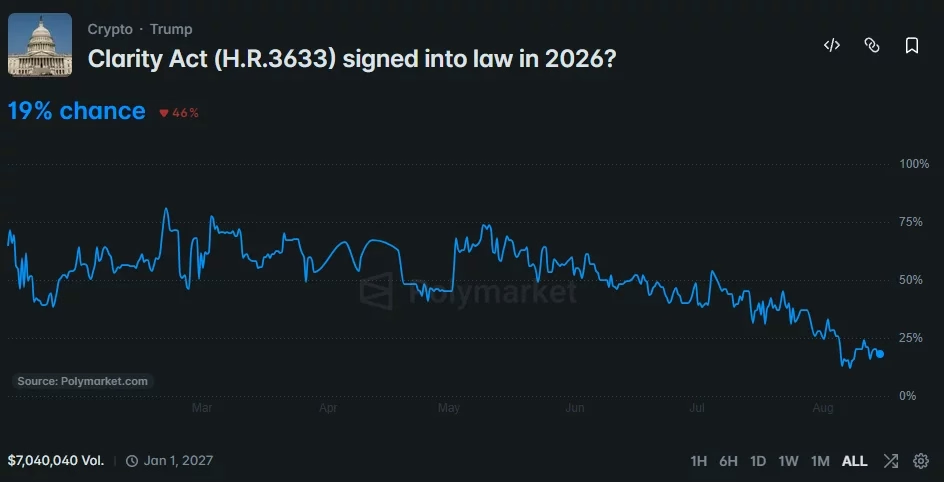
Despite the high-profile White House meeting and Senate timeline, prediction markets remain cautious about the CLARITY Act's chances. On platforms like Polymarket, traders have priced in only a 19% probability that the legislation will become law in 2026.
This skepticism reflects real concerns:
- Galaxy Research estimates just a 10% chance of passage in 2026, citing unresolved policy disputes
- Limited Senate Time: The number of working days before the midterm election recess is constrained
- Market Volatility: Probabilities have ranged from 16% to 82% (the latter in February 2026), showing trader uncertainty
- Amendment Risk: Any Senate changes require either another House vote or bipartisan negotiations
These low probabilities suggest that even industry insiders question whether the political will exists to pass comprehensive crypto legislation.
The Broader Industry Coalition 🌐
Coinbase and Ripple aren't acting alone. The other participants in the White House meeting bring different perspectives and expertise:
Chainlink works with financial institutions on blockchain infrastructure, bridging traditional finance and crypto. Paradigm invests in crypto businesses and has backed Kalshi, a CFTC-regulated prediction market operator. Andreessen Horowitz (a16z) is one of the most influential venture capital firms in blockchain, having supported the CLARITY Act through both direct advocacy and portfolio company involvement.
This diverse coalition demonstrates that regulatory clarity benefits the entire ecosystem, not just a few players.
What Happens After September 15? 🔮
If cloture passes on September 15, the Senate would begin formal debate on the CLARITY Act. Lawmakers could then introduce amendments, debate provisions, and hold a final passage vote. However, if any Senate amendments differ from the House version, the legislation would require either another House vote or negotiated reconciliation between the two chambers.
Given the unresolved disagreements and tight Senate schedule, passage remains uncertain despite the industry's united front.
Key Takeaways for Crypto Investors and Participants 💡
The August 19 White House meeting represents a critical juncture for cryptocurrency regulation in the United States. Here's what you should understand:
- Regulatory Clarity is Coming: Whether through the CLARITY Act or alternative means, the SEC-CFTC jurisdictional divide will eventually be clarified
- Industry Unity Matters: Coinbase, Ripple, and the broader coalition demonstrate that the sector can speak with one voice
- Political Reality: Passing comprehensive crypto legislation requires bipartisan support in a divided Senate
- Timing is Tight: The September 15 procedural vote creates a narrow window for action before the midterm recess
- Prediction Markets Offer Perspective: The low probability of passage suggests skepticism about legislative momentum, even among well-informed traders
The August 19 meeting may not produce immediate legislative results, but it signals that high-level conversations about crypto regulation are happening at the highest levels of government. For an industry that has long sought clarity and legitimacy, that's significant progress. 🎯
You May Also Like

Regulation
SEC Regulation Crypto Assets: New Rules Explained
August 26, 2026

Regulation
Trump's CLARITY Act: Reshaping Crypto Regulation in America
August 24, 2026
Regulation
South Korea Strengthens Crypto Oversight with New FIU Investigation Powers
August 23, 2026
Regulation
Reg Crypto Framework: End of Token Legal Ambiguity
August 23, 2026