Category:
RegulationFake Wasabi Wallet App Steals 6 BTC: Apple Store Security Crisis

The Growing Threat of Counterfeit Crypto Apps 🚨
The cryptocurrency community faces an escalating crisis as fraudulent applications continue to infiltrate major digital marketplaces with alarming frequency. A sophisticated impersonation targeting Wasabi Wallet users has resulted in the theft of approximately 6 BTC, marking yet another significant security breach on Apple's platform. This incident underscores a troubling pattern where legitimate-appearing applications bypass security protocols and drain unsuspecting investors of substantial digital assets.
The emergence of this fake Wasabi Wallet application represents far more than an isolated incident—it reflects systemic vulnerabilities in how app marketplaces vet cryptocurrency-related software. Security monitoring firms have identified this counterfeit as the 27th documented wallet clone discovered on Apple's App Store throughout the current year alone, suggesting that fraudsters have developed increasingly sophisticated methods to circumvent review processes.
Understanding the Wasabi Wallet Impersonation Attack 🎯
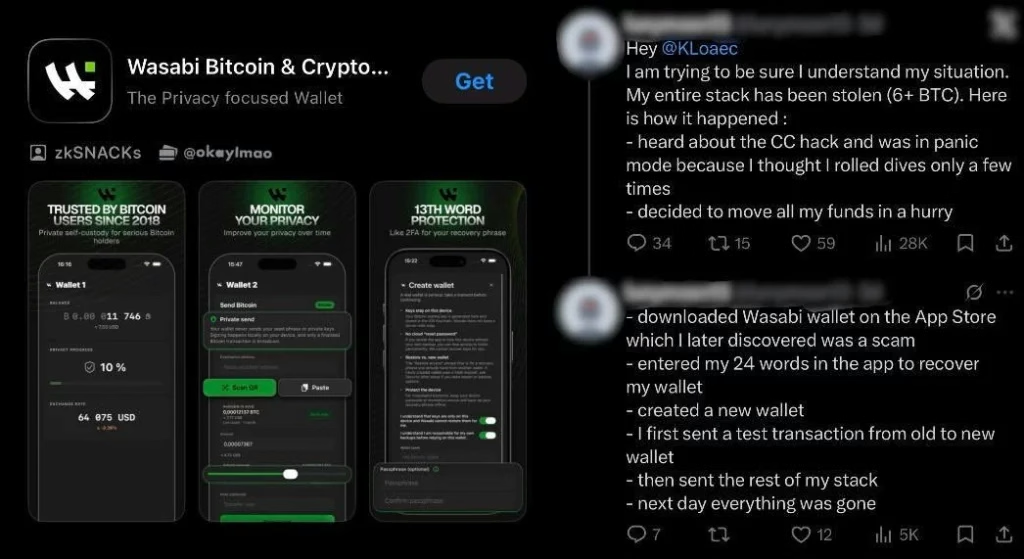
The malicious application presented itself with branding nearly identical to the legitimate Wasabi Wallet, exploiting users' familiarity with the established cryptocurrency project. According to security reports, the fraudulent listing successfully deceived at least one victim into downloading the software, resulting in the loss of 6 BTC—a substantial amount that demonstrates the financial stakes involved in these attacks.
What makes this particular case especially concerning is the lack of transparency surrounding the attack methodology. Initial reports have not disclosed whether the victim entered their recovery phrase directly into the application, fell victim to a phishing mechanism, or experienced another form of compromise. This ambiguity reflects a broader challenge in the cryptocurrency security landscape: understanding precisely how attackers gain access to wallet credentials remains critical for prevention strategies.
The timing and scale of this theft places it among the more significant individual losses attributed to wallet impersonation applications in recent months. While the exact dollar value fluctuates with Bitcoin's market price, the 6 BTC loss represents a life-changing amount for most individual investors.
The Alarming Pattern: 27 Wallet Clones This Year Alone 📊
Apple's App Store has become an unexpected vector for cryptocurrency theft, with security researchers documenting an unprecedented number of counterfeit wallet applications successfully passing through the company's review mechanisms. The Wasabi Wallet clone represents merely one entry in a rapidly expanding catalog of fraudulent offerings.
The statistics paint a disturbing picture:
- 27 documented wallet clones discovered on the App Store in the current year
- $9.3 million linked to theft through a fake Ledger application—the largest reported case
- Consistent pattern of sophisticated impersonations bypassing security reviews
- Growing sophistication in how fraudsters replicate legitimate wallet interfaces and user experiences
These numbers suggest that Apple's security review process, while generally effective at identifying malware, struggles specifically with cryptocurrency-related fraud. The reason lies partly in the nature of these applications: they often function as legitimate wallet software initially, only revealing their malicious intent once users input sensitive information.
The Ledger Precedent: A $9.3 Million Cautionary Tale 💔
The fake Ledger application represents the most financially devastating case of wallet impersonation on Apple's platform to date. This precedent provides crucial context for understanding the severity of the current Wasabi situation and the vulnerabilities that continue to plague the ecosystem.
In April of this year, renowned American musician Garrett Dutton, professionally known as G. Love, discovered that he had lost 5.9 BTC after downloading what appeared to be legitimate Ledger Live software from the App Store. Dutton's experience illustrates how even sophisticated users can fall victim to these schemes. He installed the malicious application on a new MacBook and, following the software's prompts, entered his seed phrase—the cryptographic key that provides complete access to his Bitcoin holdings.
The attacker subsequently emptied Dutton's Bitcoin reserves, assets he had accumulated over nearly a decade and designated for retirement. Blockchain investigator ZachXBT traced the stolen funds through nine transactions to addresses associated with KuCoin, a major cryptocurrency exchange. When contacted, KuCoin stated it maintains monitoring procedures aligned with regulatory requirements but declined to discuss specific details regarding the investigation.
This incident followed an earlier case in 2023 when a fake Ledger application appeared on Microsoft's store, resulting in approximately $600,000 in losses before Microsoft acknowledged the program had cleared its review process. The pattern demonstrates that this problem extends beyond a single platform and reflects broader challenges in securing cryptocurrency applications across multiple marketplaces.
Beyond App Stores: The Multi-Vector Attack Strategy 🎪
Cryptocurrency fraudsters have diversified their approach beyond digital marketplaces, employing physical mail campaigns to target wallet owners. This sophisticated multi-channel strategy reveals the organized nature of these operations.
Scammers have leveraged leaked customer databases to send physical letters bearing forged Ledger and Trezor branding. These communications typically instruct recipients to complete a supposed mandatory authentication process before a specified deadline, creating artificial urgency. The letters include QR codes directing users to fraudulent websites where they're prompted to provide their 12-word or 24-word recovery phrases.
Once attackers obtain these recovery phrases, they gain complete control over corresponding wallets and can transfer assets without requiring additional authorization from victims. This attack vector proves particularly effective because it combines:
- Trust in physical mail as a communication medium
- Convincing brand impersonation with professional materials
- Time pressure through artificial deadlines
- Legitimate-sounding language referencing security protocols
The Broader Cryptocurrency Fraud Crisis 📈
The FBI has documented alarming trends in cryptocurrency-related fraud affecting the United States. Reported losses reached approximately $11 billion in 2025, representing a 22% increase from the $9 billion documented in 2024. This trajectory suggests that fraudsters are not only maintaining their operations but actively expanding their capabilities and reach.
The escalating losses correlate directly with increased cryptocurrency adoption and growing asset values. As more individuals enter the digital asset space, they often lack the security awareness necessary to identify sophisticated impersonation attempts. This knowledge gap creates an ideal environment for organized fraud operations.
Critical Distinctions: Impersonation vs. Compromise 🔍
It's essential to clarify that these incidents represent impersonation attacks rather than compromises of the legitimate wallet projects themselves. The fake Wasabi Wallet application does not indicate that Wasabi Wallet experienced a security breach or that the legitimate project's infrastructure was compromised. Instead, fraudsters created a counterfeit application designed to deceive users into believing they were downloading authentic software.
This distinction matters significantly because it shifts responsibility toward platform security and user vigilance rather than suggesting fundamental flaws in the wallet projects' architecture. However, it also underscores that even established, reputable projects cannot fully protect users from sophisticated impersonation schemes.
Protecting Yourself: Essential Security Practices 🛡️
Given the proliferation of wallet impersonation attacks, users must implement rigorous verification procedures:
- Verify official sources: Always download wallet applications directly from official project websites rather than relying on app store searches
- Check developer information: Review the developer name, company details, and publication history before installing
- Review permissions: Examine what system permissions the application requests—legitimate wallets typically don't require excessive access
- Consult official channels: Verify application legitimacy through official social media accounts and community forums
- Use hardware wallets: Consider cold storage solutions for significant holdings to eliminate exposure to software-based attacks
- Enable security features: Utilize two-factor authentication and other security mechanisms where available
- Never share recovery phrases: Legitimate applications should never request your seed phrase or private keys
The Regulatory Response and Future Implications ⚖️
These incidents highlight the need for enhanced regulatory oversight of cryptocurrency applications on major platforms. Apple, Google, and Microsoft have faced criticism for insufficient vetting of crypto-related software despite their general security protocols. Regulators increasingly recognize that traditional app store review processes prove inadequate for cryptocurrency applications, which present unique security challenges.
Future regulatory frameworks will likely require:
- Cryptocurrency-specific review processes for digital asset applications
- Enhanced developer verification procedures for wallet and exchange applications
- Mandatory security audits before listing cryptocurrency software
- Clearer liability frameworks defining platform responsibilities
- Faster removal procedures for fraudulent applications
Looking Forward: The Path to Enhanced Security 🚀
The cryptocurrency industry faces a critical juncture. As digital assets become increasingly mainstream and institutional investment grows, the sophistication and frequency of impersonation attacks will likely intensify. The 27 wallet clones identified on Apple's App Store this year represent merely the documented cases—many fraudulent applications may operate undetected.
The Wasabi Wallet incident serves as a stark reminder that security responsibility extends across multiple stakeholders: platform providers must strengthen their vetting processes, legitimate projects must educate users about verification procedures, and individual users must maintain vigilance when downloading cryptocurrency applications. Until these elements align, the risk of falling victim to sophisticated impersonation attacks will remain substantial.
The cryptocurrency community must collectively demand higher standards from application marketplaces while simultaneously embracing security practices that minimize personal risk exposure. Only through this multi-layered approach can the ecosystem begin to adequately address the growing threat of wallet impersonation schemes.
You May Also Like

Regulation
SEC Regulation Crypto Assets: New Rules Explained
August 26, 2026
Regulation
Trump's CLARITY Act: Reshaping Crypto Regulation in America
August 24, 2026
Regulation
South Korea Strengthens Crypto Oversight with New FIU Investigation Powers
August 23, 2026

Regulation
Reg Crypto Framework: End of Token Legal Ambiguity
August 23, 2026