Category:
RegulationHTX Denies Sending Suspected Poisoning Transfers

Understanding the HTX Transfer Controversy 🔍
In mid-August 2024, the cryptocurrency community erupted with reports of suspicious small deposits appearing in user wallets, allegedly originating from addresses associated with HTX, a major cryptocurrency exchange. The incident sparked immediate concerns about potential address poisoning attacks and raised critical questions about exchange security protocols and blockchain attribution methods.
HTX responded swiftly to these allegations, issuing a statement denying any involvement in the disputed transfers and launching an internal investigation to determine the true source of the deposits. This incident has become a focal point for discussions about blockchain security, exchange accountability, and the reliability of address labeling systems.
What Exactly Happened? 📊
Community members began circulating screenshots showing small USDT deposits that appeared to originate from wallets labeled as belonging to HTX. Some users reported receiving deposits as small as 7.5 USDT in their Coinbase accounts, while others mentioned similar experiences across different platforms.
What made these transfers particularly alarming was the pattern that followed. Some users claimed their accounts subsequently received compliance inquiries or faced temporary restrictions after receiving these deposits. This sequence of events led community members to suspect a coordinated address poisoning campaign.
However, it's important to note that these claims have not been independently verified through official platform notices, blockchain security firms, or comprehensive transaction records. The reports remain largely anecdotal at this stage.
HTX's Official Response and Investigation 🛡️
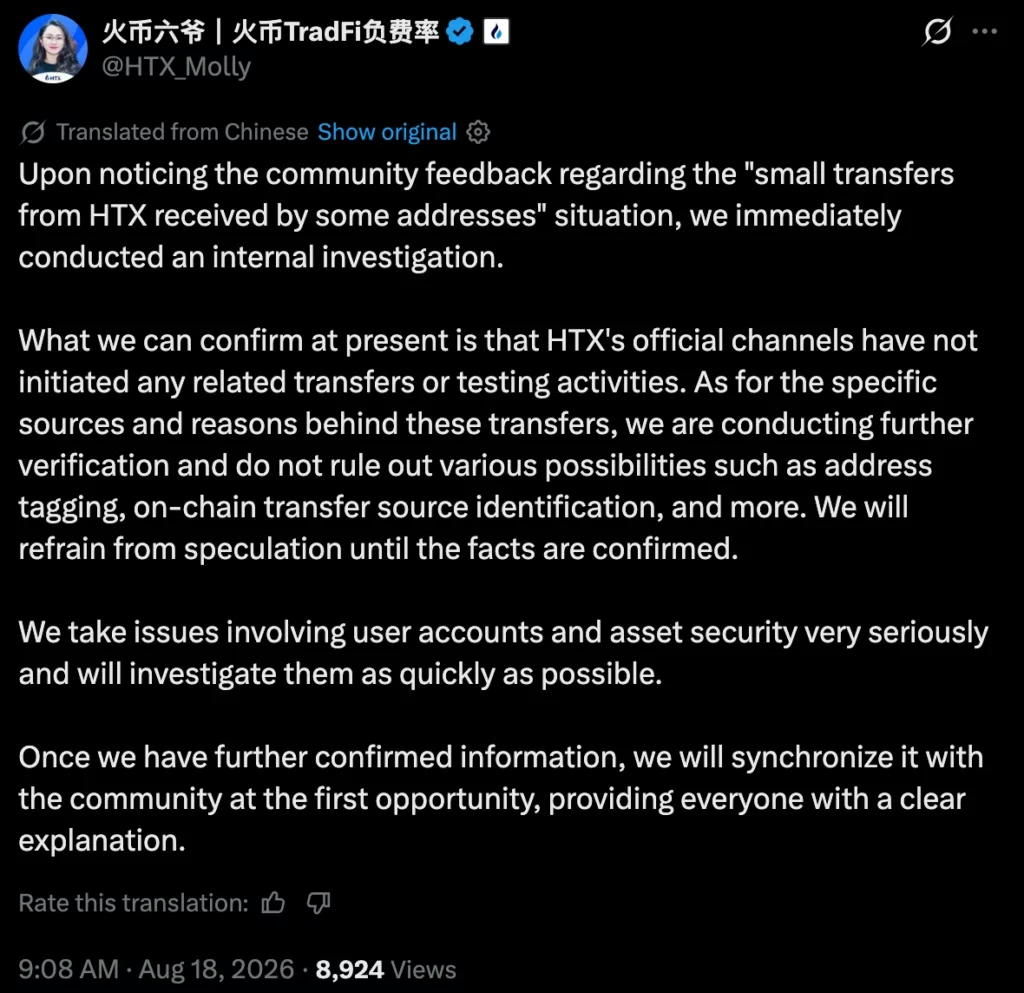
HTX categorically denied initiating any of the disputed transfers or conducting related testing activities. The exchange's statement emphasized that its internal review found no evidence of official involvement in the deposit activity. More significantly, HTX indicated it would investigate whether the transfers were the result of incorrect address labeling or attribution errors by blockchain analytics services.
The exchange committed to:
- Conducting a thorough investigation into the transaction origins
- Examining whether third-party address tagging systems may have misattributed transfers to HTX
- Providing the community with verified information upon completion of the review
- Considering the role of blockchain address identification methods in the apparent connection
Notably, HTX's statement did not provide specific transaction hashes, blockchain identifiers, or details about how many users reported receiving such deposits. The exchange also refrained from speculating about the incident before completing its investigation—a measured approach that reflects best practices in crisis communication.
Decoding Address Poisoning: How It Actually Works ⚙️
To properly evaluate this situation, it's essential to understand what address poisoning truly entails. This attack vector has become increasingly common as cryptocurrency adoption grows and users handle larger transaction volumes.
The address poisoning mechanism:
- An attacker creates a wallet address that closely resembles a legitimate address used by a target (typically differing by only one or two characters)
- The attacker sends a small transaction—sometimes with zero value—from the lookalike address to the target's wallet
- This transaction appears in the victim's transaction history, making the malicious address visible whenever they review past transactions
- The attacker hopes the victim will later copy the planted address from their history without carefully verifying each character
- When the victim sends funds to what they believe is the legitimate address, the assets go directly to the attacker
Chainalysis and other blockchain security firms have documented numerous cases where this technique has successfully redirected significant cryptocurrency holdings. One notable case involved a user losing 100,000 USDT after copying a planted lookalike address from their transaction history—a confirmed loss that stands in stark contrast to the current HTX situation where no verified losses have been documented.
The Critical Distinction: Small Deposits Don't Prove Poisoning 🔬
Here's where the current situation becomes nuanced. Small unsolicited transfers alone do not constitute definitive evidence of address poisoning. Security researchers would need to establish several additional factors:
- Whether the sending address actually resembles a legitimate address controlled by the target
- Whether the transaction was intentionally designed to manipulate the recipient's address history
- Whether any recipients subsequently sent assets to lookalike addresses
- Whether any confirmed losses resulted from the scheme
The present reports lack these verification elements. No security researcher has publicly connected the disputed transfers to a specific operator. No affected user has published complete platform notices showing permanent account restrictions. No confirmed losses have been disclosed.
This distinction matters significantly because it prevents premature conclusions about what actually occurred.
Address Labeling: The Hidden Complexity 🏷️
One of the most overlooked aspects of this incident involves how blockchain transactions get attributed to specific entities. This process is far more complex than most casual observers realize.
Blockchain transactions inherently identify only wallet addresses—they don't automatically identify which legal entity controls each address. Blockchain explorers and analytics companies assign labels using several methodologies:
- Disclosed ownership information from exchanges and services
- Transaction pattern analysis to identify behavioral signatures
- Address clustering techniques that group addresses likely controlled by the same entity
- Public announcements and official statements about address ownership
These methods can generate valuable investigative leads, but a displayed label doesn't constitute conclusive proof that the named exchange authorized or even conducted a specific transfer. Deposit addresses, consolidation wallets, payment processors, and intermediary services can further complicate the attribution process.
HTX specifically mentioned investigating "address tagging" and the identification of onchain transfer sources. This suggests the exchange is exploring whether third-party services incorrectly attributed the transfers to HTX based on incomplete or circumstantial evidence.
Interestingly, HTX had previously published a scam warning about unsolicited 0.001 USDT transfers, advising users to inspect complete wallet addresses rather than relying on shortened address displays or transaction histories. This prior guidance demonstrates the exchange's awareness of address-related security vulnerabilities.
Unverified Account Freeze Claims 🔒
Some reports suggested that users' accounts were "frozen" after receiving the disputed deposits. However, these claims require careful scrutiny and additional evidence.
No exchange has officially confirmed imposing account restrictions specifically because of the disputed transfers. The available reports lack case numbers, official platform notices, or identified wallet addresses. This absence of documentation is significant in evaluating the severity of the incident.
When exchanges request information from users, this compliance review doesn't automatically constitute an account freeze. Platforms regularly request verification when automated monitoring systems detect unfamiliar counterparties or connections to flagged addresses. Such reviews can temporarily delay access without indicating misconduct by the recipient or the sending address.
The distinction between a compliance inquiry and a permanent account restriction is crucial. Describing every compliance check as a freeze could overstate the actual impact of the incident and potentially misrepresent the sequence of events.
Broader Context: Compliance Screening Concerns 📋
This incident arrives amid wider industry concerns about automated compliance screening and its sometimes-overzealous application. In related developments, users have reported blocked transactions and frozen funds after compliance services flagged exposure to addresses associated with various exchanges, including HTX.
These earlier restrictions typically involved sanctions screening rather than direct connection to the current deposit activity. They illustrate the complex intersection of:
- Regulatory compliance requirements that exchanges must implement
- Automated systems that sometimes flag legitimate transactions
- Attribution errors that can incorrectly connect users to flagged entities
- User confusion about why transactions are blocked or delayed
The cryptocurrency industry continues grappling with balancing robust compliance measures against the risk of false positives that unnecessarily restrict legitimate users.
What HTX's Investigation Must Establish 🔍
For the exchange to fully resolve this matter and restore community confidence, its investigation will need to address several key questions:
- Identify the sending addresses: Which specific wallets initiated the disputed transfers?
- Establish control: Who actually controlled these addresses? Were they operated by HTX, a third party, or someone else entirely?
- Explain motivation: Why were these transfers made? What was the intended purpose?
- Verify attribution: How did the addresses become labeled as HTX wallets in blockchain explorers?
- Assess impact: How many users received deposits? Were any confirmed losses incurred?
- Determine causation: Is there a causal link between receiving deposits and account restrictions?
HTX has committed to providing verified information to the community, though the exchange did not specify a timeline for completing its investigation.
Industry Implications and Lessons 💡
This incident highlights several important lessons for the cryptocurrency ecosystem:
For users: Always verify complete wallet addresses character-by-character rather than relying on shortened displays or transaction histories. Copy addresses directly from official sources whenever possible.
For exchanges: Transparent communication about security incidents builds trust. Providing regular updates on investigations, even if preliminary, helps manage community concerns.
For blockchain services: Address labeling systems should incorporate confidence scores and clear disclaimers about attribution limitations. Incorrect labels can have real consequences for users.
For regulators: The incident underscores the need for clear frameworks distinguishing between compliance inquiries and actual account restrictions, preventing unnecessary market confusion.
Looking Ahead: What Comes Next 🚀
As HTX continues its investigation, the cryptocurrency community will be watching closely for:
- Detailed findings about the transfer origins
- Transparency regarding the number of affected users
- Clear explanations of any address labeling issues
- Confirmation about whether any accounts were actually restricted
- Recommendations for preventing similar incidents
This situation serves as a reminder that blockchain security extends far beyond simple technical measures. It encompasses address labeling accuracy, exchange communication protocols, user education, and the complex intersection of compliance and operational security.
Final Takeaways ✨
The HTX transfer incident demonstrates that not every suspicious-seeming transaction represents a coordinated attack. While address poisoning remains a genuine threat in the cryptocurrency ecosystem, the current situation illustrates the importance of:
- Distinguishing between confirmed incidents and unverified reports
- Understanding the limitations of blockchain address attribution methods
- Recognizing that compliance reviews differ from account freezes
- Demanding transparency from exchanges during investigations
- Maintaining healthy skepticism about community claims pending independent verification
As the investigation unfolds, this incident will likely provide valuable insights into blockchain security vulnerabilities and the evolving sophistication of cryptocurrency threats. The outcome could influence how exchanges handle similar situations in the future and inform industry best practices for address security.
You May Also Like

Regulation
SEC Regulation Crypto Assets: New Rules Explained
August 26, 2026

Regulation
Trump's CLARITY Act: Reshaping Crypto Regulation in America
August 24, 2026
Regulation
South Korea Strengthens Crypto Oversight with New FIU Investigation Powers
August 23, 2026

Regulation
Reg Crypto Framework: End of Token Legal Ambiguity
August 23, 2026