Category:
DeFiIntent-Based DEXs vs AMMs: The Future of Decentralized Trading
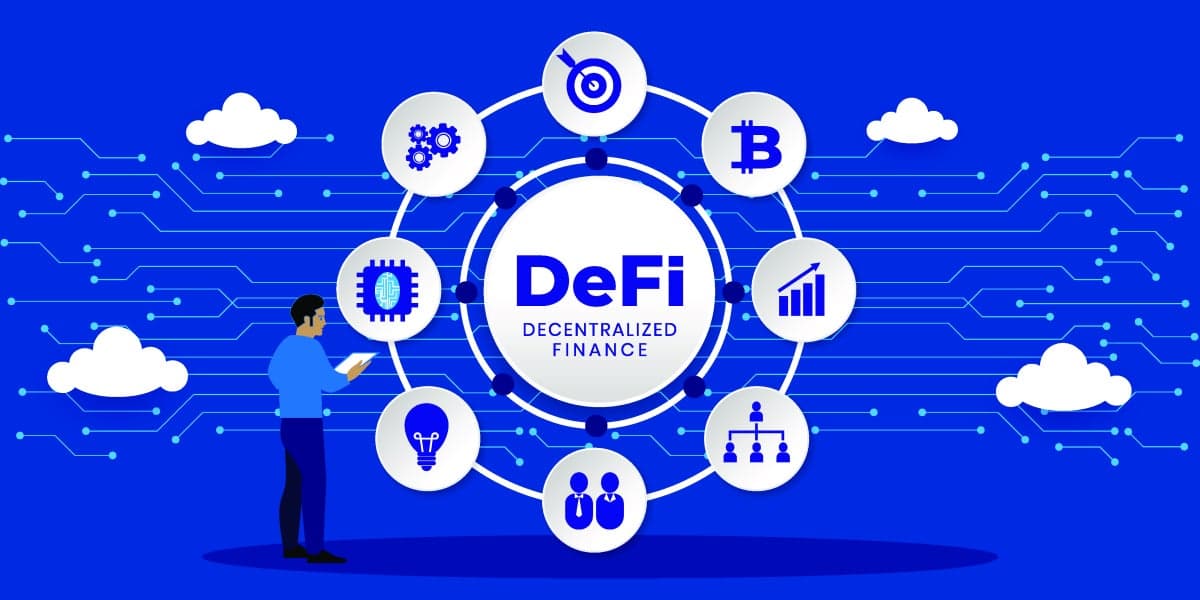
The Evolution of Decentralized Exchange Architecture 🚀
The decentralized finance landscape is undergoing a fundamental transformation. For years, automated market makers revolutionized how traders access liquidity without intermediaries. Yet a new paradigm is emerging that challenges the AMM model itself—one that separates what traders want from how they get it.
Intent-based decentralized exchanges represent the most significant architectural shift in DEX design since AMMs first disrupted traditional order book models. Rather than forcing traders to execute transactions directly against fixed pricing curves, these platforms introduce a competitive layer where multiple solvers race to provide the best possible execution.
Understanding Automated Market Makers: Elegant But Expensive 💰
Before exploring intent-based systems, it's essential to understand why AMMs, despite their revolutionary impact, carry inherent structural costs. The constant product formula (x * y = k) that powers most AMMs creates an elegant mathematical framework for pricing trades automatically. However, this elegance comes with a significant price tag.
Slippage represents the first cost layer. When you execute a large trade against an AMM pool, the transaction size relative to available liquidity determines your effective price. A modest swap barely impacts the pricing curve, but substantial trades push the price progressively worse as they move along the curve. This isn't a flaw—it's the mechanism preventing pools from depletion. Yet for large traders, slippage can consume 1-5% of transaction value, sometimes more during volatile market conditions.
MEV extraction adds a second invisible cost. Every transaction submitted to an AMM sits in the public mempool, visible to specialized searchers who monitor for profitable opportunities. These actors execute sandwich attacks: purchasing tokens before your transaction to drive prices up, allowing your trade to execute at worse prices, then selling immediately for profit. The searcher captures the spread, and you absorb the loss without even realizing it happened.
Impermanent loss affects liquidity providers. When true market prices diverge from pool prices before arbitrage corrections occur, traders receive better prices than market rates. Liquidity providers absorb this loss, and despite the term "impermanent," it becomes permanent whenever prices don't fully revert to original levels.
These three costs—slippage, MEV extraction, and impermanent loss—aren't accidental design flaws. They're structural consequences of requiring traders to execute directly against fixed pricing mechanisms.
How Intent-Based DEXs Reimagine Trading 🔄
Intent-based decentralized exchanges separate transaction intention from execution methodology. Instead of executing directly against a liquidity pool, traders sign an off-chain message specifying three elements:
- The token they want to sell and the token they want to receive
- The minimum acceptable price they're willing to accept
- The deadline by which the transaction should complete
Notably, the intent doesn't specify routing paths, liquidity sources, or gas payment mechanisms. These execution details are delegated entirely to third-party solvers—a competitive network racing to provide optimal pricing.
The Solver Competition Layer ⚙️
Solvers represent the innovation engine in intent-based systems. These entities receive batches of user intents and compete vigorously to fill them at the best possible prices. The winning solver—the one offering superior execution—earns the right to settle the order.
Solvers possess remarkable flexibility in execution strategies. They can:
- Route through multiple AMM pools simultaneously to minimize slippage
- Access their own private inventory to fill orders directly
- Tap centralized exchange liquidity for better pricing
- Match orders directly against other traders, creating coincidences of wants
- Negotiate with block builders for optimal inclusion
This flexibility fundamentally changes the competitive dynamics. Instead of traders accepting whatever price the AMM curve dictates, solvers actively compete to provide the best execution available across all liquidity sources.
Leading Intent-Based DEX Implementations 🌟
The intent-based model manifests differently across leading protocols, each employing unique mechanisms:
UniswapX utilizes Dutch auctions for price discovery. Auctions begin above market price and gradually decline over time until a solver decides to fill the order. This mechanism ensures traders receive the best price available within their specified timeframe, with any surplus value flowing back to the trader rather than being captured elsewhere.
CoW Protocol (Coincidences of Wants) batches multiple intents together and identifies opportunities to match opposing trades directly. When two traders want to exchange the same token pairs, CoW matches them directly, eliminating unnecessary intermediation. Only remainders route to on-chain liquidity sources.
1inch Fusion delegates execution to resolvers who compete on price within defined time windows. This approach combines competitive pressure with temporal flexibility, allowing solvers to optimize execution strategies while ensuring traders receive timely fills.
MEV Protection: The Hidden Advantage 🛡️
One of intent-based DEXs' most compelling benefits is inherent MEV (maximal extractable value) protection. In traditional AMM systems, pending transactions visible in the public mempool become targets for sandwich attackers and front-runners.
Intent-based systems eliminate this vulnerability entirely. Signed off-chain messages remain invisible to mempool searchers until execution occurs. Solvers execute trades privately, and Dutch auction mechanisms ensure any surplus value flows back to traders rather than being captured by block builders or MEV searchers.
This protection alone represents a significant value transfer from sophisticated extractors back to regular traders—potentially recovering 0.5-2% on typical trades, substantially more for large transactions.
Why AMMs Are Being Augmented, Not Replaced 🔗
A common misconception frames intent-based DEXs as AMM replacements. This misses the nuance. Intent-based systems don't reject AMMs; they layer on top of them, providing traders access to AMM liquidity without bearing full structural costs.
AMMs solved a critical problem too effectively. By making liquidity provision trivial for any token pair, they enabled decentralized trading volume to explode from near-zero to trillions of dollars annually. Yet this same mechanism that solved liquidity provision created structural inefficiencies in trading execution.
Intent-based DEXs represent evolution, not revolution. They preserve AMM liquidity while introducing competitive mechanisms that let traders access that liquidity more efficiently. Solvers can route through AMM pools as one option among many, but traders no longer bear the full cost of AMM mechanics.
The Competitive Advantage for Traders 📊
Intent-based DEXs deliver measurable improvements across multiple dimensions:
- Better pricing through competitive solver mechanisms
- Reduced slippage via multi-source routing and private inventory access
- MEV protection through off-chain intent processing
- Improved capital efficiency from direct order matching
- Lower gas costs from batched transaction settlement
For retail traders, these improvements translate to more tokens received for the same amount spent. For sophisticated traders and institutions, the benefits compound through larger order sizes and more sophisticated routing strategies.
Challenges and Considerations ⚠️
Intent-based systems introduce new complexities requiring careful consideration. Solver centralization risks could emerge if few solvers dominate the competitive layer. Regulatory ambiguity surrounding solver roles and responsibilities remains unresolved in most jurisdictions.
Additionally, intent-based systems require users to trust that signed messages will be executed fairly. While cryptographic guarantees provide some assurance, the competitive solver layer introduces new trust assumptions compared to deterministic AMM pricing.
The Broader DeFi Landscape Implications 🌐
Intent-based DEXs signal a maturation in DeFi infrastructure. Early decentralized trading prioritized accessibility and simplicity, accepting structural inefficiencies as necessary trade-offs. The ecosystem has evolved to demand both accessibility and efficiency.
This evolution mirrors traditional finance's journey. Just as centralized markets evolved from simple order books to complex routing systems optimizing execution, decentralized markets are developing sophisticated mechanisms for price discovery and order fulfillment.
The emergence of intent-based systems also reflects growing institutional participation in DeFi. Sophisticated traders and protocols require execution quality that AMMs alone cannot provide. Intent-based DEXs bridge this gap while maintaining decentralization principles.
Looking Forward: The Future of Decentralized Trading 🔮
Intent-based DEXs represent an important inflection point in decentralized finance evolution. As these systems mature and gain adoption, we can expect:
- Increased solver competition driving continuous execution improvements
- Integration with multiple liquidity sources including both on-chain and off-chain venues
- Enhanced privacy mechanisms protecting trader information while maintaining transparency
- Regulatory frameworks clarifying solver responsibilities and trader protections
- Cross-chain intent settlement enabling seamless trading across multiple blockchains
The transition from execution-based to intention-based trading represents more than a technical upgrade. It reflects a fundamental shift in how decentralized markets can optimize for trader outcomes while maintaining decentralization principles.
Conclusion: A New Era for Decentralized Trading 🎯
Intent-based decentralized exchanges demonstrate that AMMs, while revolutionary, weren't the final word in DEX architecture. By separating trader intentions from execution mechanics, these platforms unlock efficiency gains that benefit all participants.
For traders, intent-based DEXs offer better pricing, reduced slippage, and MEV protection. For the broader DeFi ecosystem, they represent evidence that decentralized finance can achieve execution quality comparable to centralized venues while maintaining decentralization benefits.
As the ecosystem continues evolving, intent-based DEXs will likely become the default choice for traders prioritizing execution quality. The AMM model won't disappear—it will become one liquidity source among many, accessed through competitive solver networks optimizing for trader outcomes. This evolution marks the maturation of decentralized trading infrastructure and opens new possibilities for efficient, transparent financial markets.
You May Also Like
DeFi
RWA Deposits Surge to $7.4B as DeFi Market Shifts
August 26, 2026

DeFi
The $8.5M DAO Governance Heist: How $951 Broke DeFi Security
August 25, 2026
DeFi
Aave's Hidden Liquidation Risk: Concentrated Positions & DeFi Vulnerability
August 22, 2026
DeFi
The $15 Billion Crypto Exodus: LayerZero's Crisis
August 20, 2026