Category:
RegulationKalshi Faces Michigan Ban on Sports Contracts

In a significant development, a Michigan court has temporarily halted Kalshi from offering sports event contracts to its residents. This decision marks a pivotal moment in the ongoing legal battle over prediction markets and their regulatory oversight. 🌟
The Legal Battle Unfolds
On June 13, 2023, Ingham County Circuit Court Judge Rosemarie Aquilina issued a temporary restraining order against Kalshi. This order prohibits the platform from providing sports event contracts in Michigan for 14 days, with the possibility of a $120,000 daily fine for non-compliance with geolocation requirements. The court's decision underscores the intense scrutiny these platforms face as they navigate the complex landscape of state and federal regulations. ⚖️
The lawsuit, initiated by Michigan Attorney General Dana Nessel, contends that Kalshi's operations infringe upon the state's Lawful Sports Betting Act by functioning as unlicensed gambling. This move is part of a broader trend of states challenging the legality of prediction markets.
A Broader Regulatory Crackdown
Michigan is not alone in its efforts. Earlier this year, Nevada also secured a temporary injunction against Kalshi, while Kentucky has filed lawsuits against several prediction market platforms, including Polymarket. These legal actions reflect a growing tension between state jurisdictions and the federally regulated scope of prediction markets.
The U.S. Commodity Futures Trading Commission (CFTC) has weighed in, asserting that such contracts fall under its jurisdiction. This conflict between state and federal authority continues to evolve, as evidenced by Kalshi's recent federal lawsuit against Illinois. The company argues that state-level licensing requirements contradict the Commodity Exchange Act, which grants the CFTC sole regulatory authority.
The Impact of Global Events
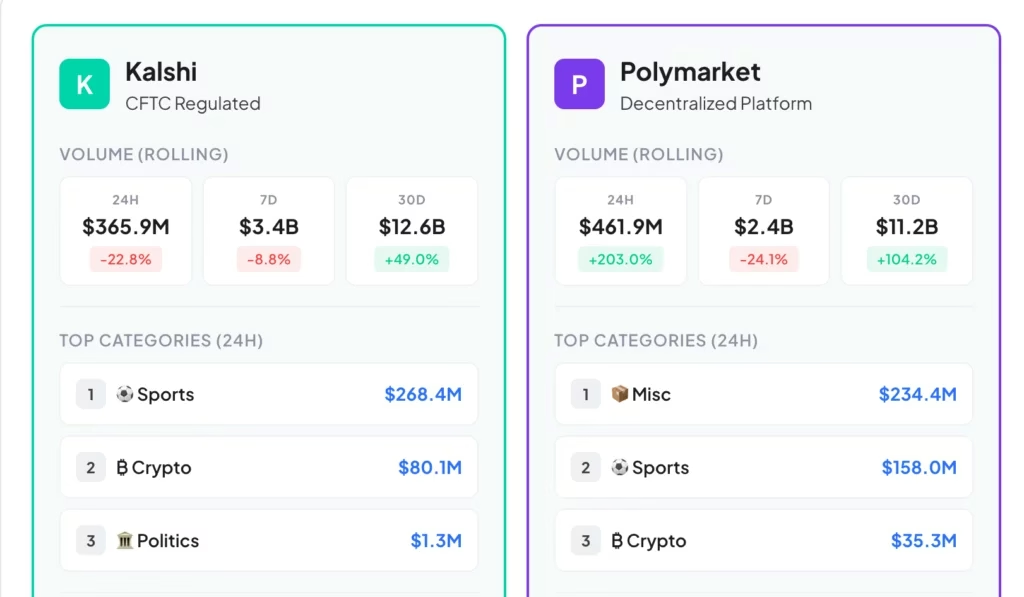
Despite these legal challenges, the popularity of sports prediction markets has surged, particularly during high-profile events like the 2026 FIFA World Cup. According to Dune data, platforms such as Polymarket reported unprecedented trading volumes, with daily taker volumes reaching $713 million post-tournament commencement. 📈
Kalshi, too, has seen a significant uptick in activity, with sports-related trading volumes climbing 40% to $9.5 billion. This surge highlights the robust demand for prediction markets, even as they face increasing legal hurdles.
The Future of Prediction Markets
As this legal saga unfolds, the future of prediction markets remains uncertain. Will state-level restrictions impede their growth, or will federal oversight prevail, allowing platforms like Kalshi to operate freely across the U.S.? The outcome of these legal battles will likely shape the landscape of sports betting and prediction markets for years to come. 🔮
Key Takeaways
- Regulatory Challenges: Kalshi faces significant legal challenges that may redefine the framework for prediction markets.
- State vs. Federal Jurisdiction: The ongoing disputes underscore the tension between state laws and federal regulations.
- Market Demand: Despite legal issues, prediction markets are thriving, driven by major global events.
In conclusion, while the temporary ban in Michigan represents a setback for Kalshi, it also highlights the broader regulatory challenges facing prediction markets. As these legal battles continue, stakeholders will be closely watching for developments that could redefine the industry. 🔍