Category:
RegulationMiCA's Impact on Europe's Crypto Market

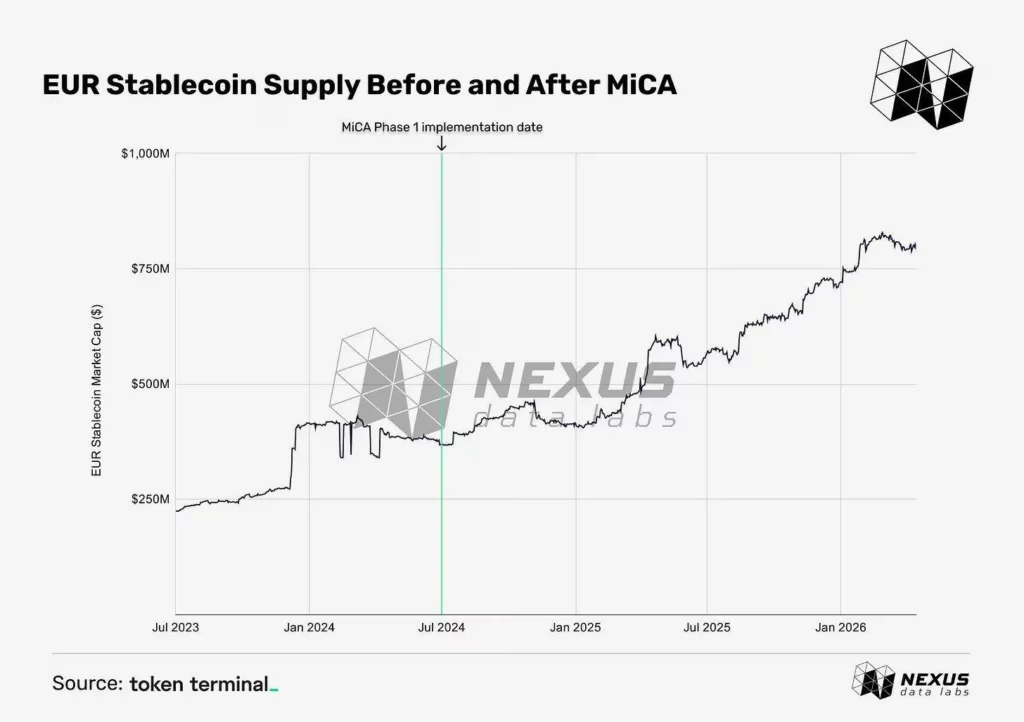
The introduction of the Markets in Crypto-Assets regulation (MiCA) has significantly reshaped the crypto landscape in Europe. 🌍 As of July 1, 2026, the transitional period for MiCA's implementation concluded, leading to a dramatic shift in how crypto companies operate within the European Union.
A New Era of Regulation
MiCA was designed to bring clarity and uniformity to the crypto market across EU member states. However, its implementation has not been without challenges. More than 3,000 companies previously operated under Virtual Asset Service Provider (VASP) licenses. As MiCA's stricter compliance requirements took effect, only 244 companies successfully transitioned to obtaining Crypto Asset Service Provider (CASP) licenses. This regulatory tightening forced over 80% of firms to either shut down or restructure.
The Regulatory Shake-up
The new regulatory framework requires crypto companies to adhere to stringent Anti-Money Laundering (AML) and Know Your Customer (KYC) protocols. These measures align crypto operations with traditional financial services under the Markets in Financial Instruments Directive II (MiFID II). The era of easy entry for crypto startups is over, with new ventures now facing intense regulatory scrutiny.
Challenges and Opportunities
This regulatory overhaul presents both challenges and opportunities. Companies must navigate complex compliance landscapes, often incurring significant costs. For example, compliance with MiCA can cost up to $1 million in upfront expenses, a hefty price for many startups.
Survival of the Fittest
Despite the hurdles, several prominent players like Coinbase, Kraken, and Crypto.com have successfully secured CASP licenses, allowing them to operate across all EU member states with a single registration. This pan-European access is a significant advantage for those who meet the regulatory requirements.
MiCA's Ripple Effects
The impact of MiCA extends beyond regulatory compliance. The regulation has reshaped market dynamics, with many companies relocating to jurisdictions with more favorable regulatory environments, such as Dubai and Singapore. Others have opted for Switzerland's FINMA supervision via Self-Regulatory Organizations (SROs), which provides a more accommodating yet compliant framework.
The Swiss Solution
Switzerland's Crypto Valley is flourishing as a hub for blockchain innovation, with over 1,749 crypto companies registered. The country's regulatory framework offers a compelling alternative to MiCA, allowing companies to maintain operations with legal backing and reduced regulatory burdens.
Looking Forward
The road ahead for Europe's crypto market involves navigating these new regulatory landscapes. While MiCA has imposed significant constraints, it also provides a pathway to legitimacy and broader market access for compliant firms. For crypto companies willing to adapt, the potential rewards include greater stability and credibility within the financial ecosystem.
In conclusion, MiCA represents a pivotal moment for crypto in Europe, forcing the market to adapt and evolve. While the regulatory barriers are substantial, the opportunities for those who comply could redefine the future of digital finance across the continent.
You May Also Like

Regulation
SEC Regulation Crypto Assets: New Rules Explained
August 26, 2026

Regulation
Trump's CLARITY Act: Reshaping Crypto Regulation in America
August 24, 2026
Regulation
South Korea Strengthens Crypto Oversight with New FIU Investigation Powers
August 23, 2026

Regulation
Reg Crypto Framework: End of Token Legal Ambiguity
August 23, 2026