Category:
NFTs & Web3NFT Market Explodes: $95.5M Weekly Sales Driven by Pandora
The digital collectibles landscape just experienced a seismic shift 🚀. Over the past seven days, the NFT market recorded an impressive $95.48 million in total sales volume, representing a stunning 170% surge compared to the previous week's $35.29 million. However, this explosive growth tells a more nuanced story than headline numbers might suggest, with a single mega-transaction reshaping market dynamics in ways that warrant deeper examination.
The Pandora Effect: Understanding the Market Surge 📊
The primary catalyst behind this week's NFT sales explosion was undoubtedly a massive $55.03 million transaction involving Pandora, a hybrid NFT project that has been generating considerable buzz in the Web3 community. This single transaction accounted for approximately 58% of all NFT sales recorded during the seven-day period, fundamentally shaping the market narrative.
When examining the data more critically, excluding Pandora's contribution reveals that the broader NFT market generated approximately $40.28 million in organic sales. This adjusted figure provides crucial context—while still respectable, it demonstrates that the headline 170% increase was driven by concentrated whale activity rather than a market-wide renaissance in collectible demand.
The transaction volume metrics further illustrate this dynamic. While buyer addresses surged 49% to 172,739 and seller addresses increased 50% to 159,275, total transactions grew only 7.5% to 962,992. The average transaction value jumped from approximately $39 to $99, a 154% increase that directly correlates with Pandora's outsized contribution.
Pandora's Innovative ERC-404 Model 🔧
Understanding Pandora's significance requires familiarity with its groundbreaking technical architecture. The project implements the experimental ERC-404 standard, which represents a fascinating hybrid approach combining features from both fungible ERC-20 tokens and non-fungible ERC-721 assets.
In Pandora's ecosystem, each full PANDORA token is intrinsically connected to a Replicant NFT. When transfers occur, the system can automatically mint or burn NFTs based on the transaction parameters. This innovative structure provides liquidity mechanisms typically unavailable to traditional NFT projects, fundamentally altering how these assets behave in the marketplace.
The ERC-404 model introduces complexity that makes direct comparison with conventional one-of-one artwork or profile-picture NFT transactions problematic. The $55 million event, while classified as an NFT sale by tracking platforms, operates under different economic principles than standard collectible transactions, making it somewhat unique in nature.
Ethereum Dominates Blockchain NFT Activity 💎
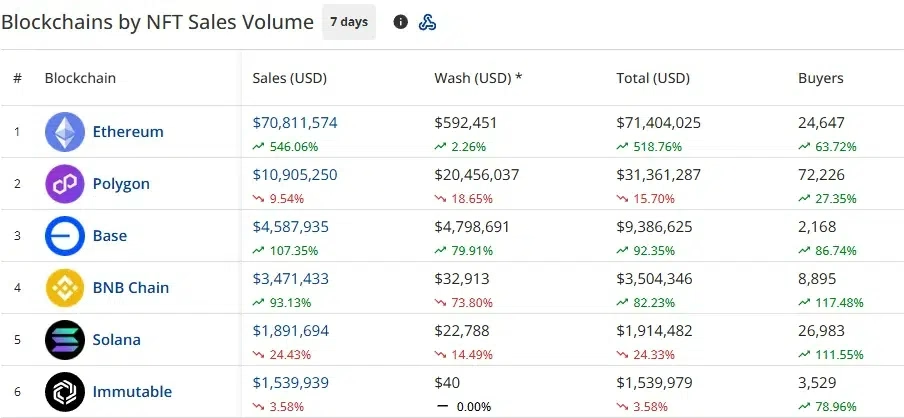
Ethereum continues its reign as the primary blockchain for NFT transactions, generating $70.81 million in sales—approximately 74% of global NFT volume. This represents a remarkable 546% increase week-over-week, though this figure requires important context.
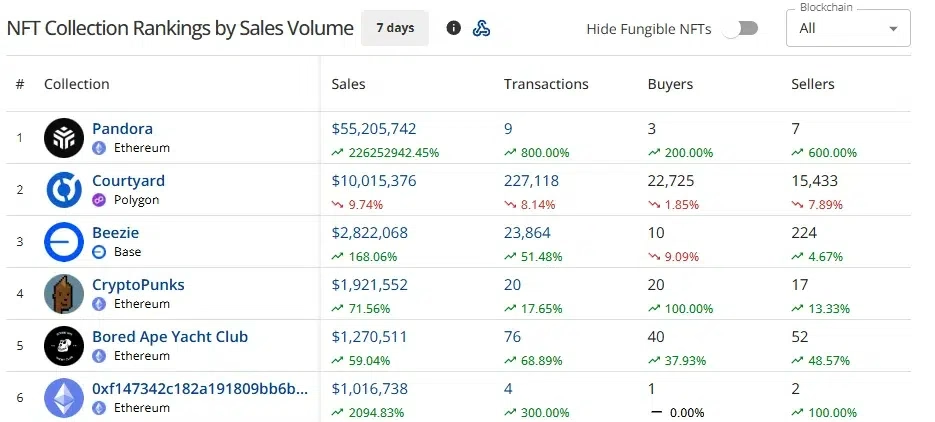
Pandora alone accounted for $55.21 million of Ethereum's total, representing roughly 78% of the network's organic NFT sales. Stripping away Pandora's contribution, Ethereum generated approximately $15.61 million in NFT transactions. While this would still position Ethereum ahead of competing blockchains, the adjusted figure reveals a far more modest weekly increase than the headline 546% suggests.
Ethereum's buyer address count increased 63.7% to 24,647, demonstrating genuine growth in network participation even after accounting for Pandora's dominance. This metric suggests that while Pandora drove volume, other market participants remained active contributors to ecosystem activity.
Competition Heats Up: Alternative Blockchains Gaining Ground 🌐
While Ethereum maintains market leadership, competing blockchains continue capturing meaningful market share. Polygon ranked second with $10.91 million in sales, though this represented a 9.54% decline from the previous period. Interestingly, Polygon's buyer count increased 27% to 72,226, creating a fascinating disconnect between lower dollar volume and higher wallet participation.
This pattern suggests that Polygon is experiencing increased user engagement despite reduced transaction values—potentially indicating a shift toward smaller, more frequent transactions rather than high-value whale activity.
Base emerged as an impressive performer, generating $4.59 million in sales with a 107% week-over-week increase. Buyer addresses on Base climbed 86.74% to 2,168, demonstrating strong momentum for the emerging blockchain platform. BNB Chain followed with $3.47 million in sales, up 93%, with buyer addresses more than doubling to 8,895.
Solana, despite its historical prominence in NFT trading, recorded $1.89 million in sales—a 24% decline. However, buyer addresses surged 111.5% to 26,983, mirroring Polygon's pattern of increased participation despite reduced transaction values. This trend warrants monitoring as it may indicate shifting market dynamics favoring smaller, retail-driven transactions over institutional whale activity.
Collection Rankings: Pandora's Dominance Reshapes the Landscape 🏆
Pandora's $55.21 million in sales from just nine transactions represents an extraordinary concentration of value. The collection's buyer and seller address counts—three and seven respectively—underscore the whale-driven nature of this activity. For context, these figures stand in stark contrast to Courtyard, which ranked second with $10.02 million across 227,118 transactions involving 22,725 buyer addresses.
Courtyard's performance, while representing a 10% decline from the previous period, demonstrates the resilience of marketplace infrastructure NFTs. The Polygon-based collection continues processing substantial transaction volume, suggesting consistent demand for marketplace functionality tokens.
Beezie claimed the third position with $2.82 million in sales, up 168% week-over-week. Despite processing 23,864 transactions, CryptoSlam's data recorded only 10 unique buyer addresses and 224 sellers—a pattern suggesting bot activity or concentrated seller behavior.
CryptoPunks maintained relevance with $1.92 million in sales, up 71.5%, completing 20 transactions. The iconic Ethereum collection's consistent performance underscores the enduring appeal of early NFT projects. Bored Ape Yacht Club generated $1.27 million from 76 transactions, up 59%, with buyer addresses increasing 37.9% to 40.
Market Context: Cryptocurrency Tailwinds and Broader Trends 📈
This NFT surge occurred amid broader cryptocurrency market strength. Bitcoin surged above $72,000 during a significant short squeeze, while Ethereum climbed above $2,400 as exchange-traded fund inflows returned to the market. However, it's important to note that rising cryptocurrency prices don't automatically translate to increased NFT demand.
The NFT market has evolved considerably since the 2021-2022 speculative peak. Current activity patterns suggest a market bifurcation: whale-driven transactions in novel projects like Pandora coexist with steady, retail-focused activity across established collections and marketplace infrastructure tokens.
Key Metrics Worth Monitoring 🔍
Several data points warrant ongoing observation:
- Transaction value dispersion: The 154% increase in average transaction value indicates significant whale activity concentration
- Buyer participation growth: The 49% increase in buyer addresses suggests genuine market expansion despite concentrated whale transactions
- Blockchain diversification: Alternative chains gaining market share from Ethereum indicates ecosystem maturation and competition
- Wash trading activity: Polygon's $20.46 million in recorded wash volume highlights ongoing market quality concerns
Looking Ahead: What This Means for NFT Markets 🔮
The current market dynamics suggest an NFT ecosystem in transition. The Pandora phenomenon demonstrates continued appetite for experimental tokenomics and hybrid asset models. However, the underlying market—excluding mega-transactions—remains relatively modest at approximately $40 million weekly.
For investors and participants, this environment requires discernment between headline-grabbing whale activity and sustainable, fundamentals-driven market growth. The 49% increase in buyer addresses provides encouraging evidence of broader participation, yet the concentration of value in single transactions reminds us that NFT markets remain vulnerable to whale-driven volatility.
The emergence of alternative blockchains as meaningful competitors to Ethereum, combined with growing participation across diverse collections, suggests a maturing market with increasingly sophisticated infrastructure. Whether this week's surge represents the beginning of a sustained bull run or merely a temporary spike remains to be seen—but the underlying metrics suggest the NFT market continues evolving in meaningful ways. ✨