Category:
BitcoinPeter Schiff Criticizes Strategy's Bitcoin Move

Peter Schiff, noted for his vocal criticism of cryptocurrencies, has once again stirred the pot by labeling Strategy's recent actions as a "Ponzi scheme." This comes after Strategy sold $216 million worth of Bitcoin to fund dividend payments, a move that has sparked discussions across the crypto community.
Understanding Strategy's Bitcoin Sale 🏦
Strategy recently offloaded 3,588 BTC, amounting to $216 million, to finance dividends linked to its Digital Credit securities. Despite this sale, Strategy maintains a substantial holding of 843,775 BTC and approximately $2.55 billion in U.S. dollar reserves. This sale is noteworthy given Strategy's status as the largest publicly traded corporate Bitcoin holder, a position closely associated with Michael Saylor's steadfast buy-and-hold strategy.
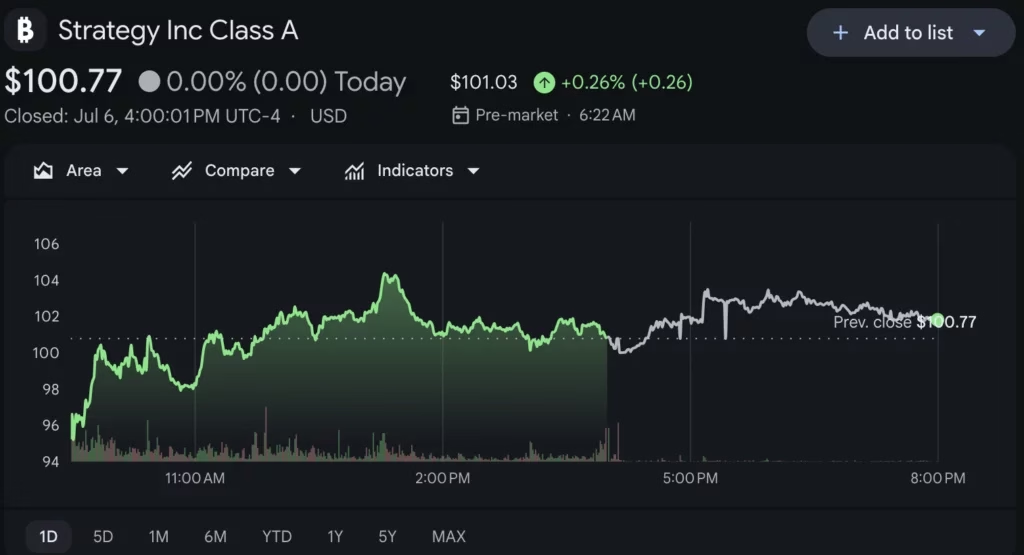
Schiff's Perspective on Strategy's Model 📉
Schiff has criticized Strategy's shift from issuing stock and debt to acquire Bitcoin, arguing that its new model resembles a "mid-cycle Ponzi." According to Schiff, the company's reliance on Bitcoin sales to meet dividend and debt obligations could pose significant risks, especially if Bitcoin prices fall and yields rise. This critique aligns with ongoing concerns about the sustainability of Strategy's funding structure.
Strategic Moves and Financial Implications 💼
To understand the implications of Strategy's actions, it's essential to consider the company's broader financial strategy. Recently, Strategy authorized up to $1.25 billion in Bitcoin sales under its Digital Credit Capital Framework. This framework is designed to bolster cash reserves and support dividends, debt costs, and buybacks. The increased dividend rate to 12% for STRC and the authority for buybacks further highlight Strategy's commitment to maintaining investor confidence.
Michael Saylor's Defense of Bitcoin Sales 🛡️
Michael Saylor, the face of Strategy's Bitcoin strategy, has defended the decision to sell Bitcoin, emphasizing that it doesn't deviate from their overall accumulation strategy. Saylor insists that the goal is not to become a net Bitcoin seller but to manage capital effectively. "Even if we were to sell one Bitcoin, we’d be buying 10 to 20 more Bitcoin," Saylor explained, reinforcing the company's long-term vision.
Market Reactions and Bitcoin's Stability 🔍
Following Strategy's sale, Bitcoin traded near $63,369, having fluctuated between $61,350 and $64,435. This stability suggests that the market has absorbed the sale without significant disruption. However, Schiff warns of potential volatility, suggesting that a fall below the $58,000 support level could trigger further declines.
Broader Implications for the Cryptocurrency Market 🌐
Strategy's actions are under intense scrutiny, given their potential impact on Bitcoin reserves, preferred dividends, and market confidence. The market's ability to absorb future sales will be a critical test of Bitcoin's resilience and the sustainability of Strategy's monetization plan.
Conclusion: The Future of Bitcoin Strategy 🚀
As Strategy navigates its financial landscape, the crypto community will continue to watch closely. While Schiff's criticisms highlight potential risks, the market's response will ultimately determine the viability of Strategy's approach. Investors and enthusiasts alike should remain vigilant, assessing how Strategy's actions align with broader market trends and regulatory developments.
In this evolving saga, one thing is certain: Strategy's influence on the crypto market will remain significant, shaping discussions around Bitcoin's role in corporate strategies and investment portfolios.
You May Also Like

Bitcoin
Bitcoin as Hedge Against $40T U.S. Debt Crisis
August 24, 2026

Bitcoin
Tether's $120M Uruguay Bitcoin Mining Exit: What Went Wrong
August 23, 2026

Bitcoin
Bitcoin as Reserve Currency: Escaping the Dollar's Monetary Trap
August 22, 2026

Bitcoin
Bitcoin Treasury Returns to Profit Above $75,385
August 21, 2026