Category:
RegulationThe CLARITY Act's Unexpected Impact on CBDCs
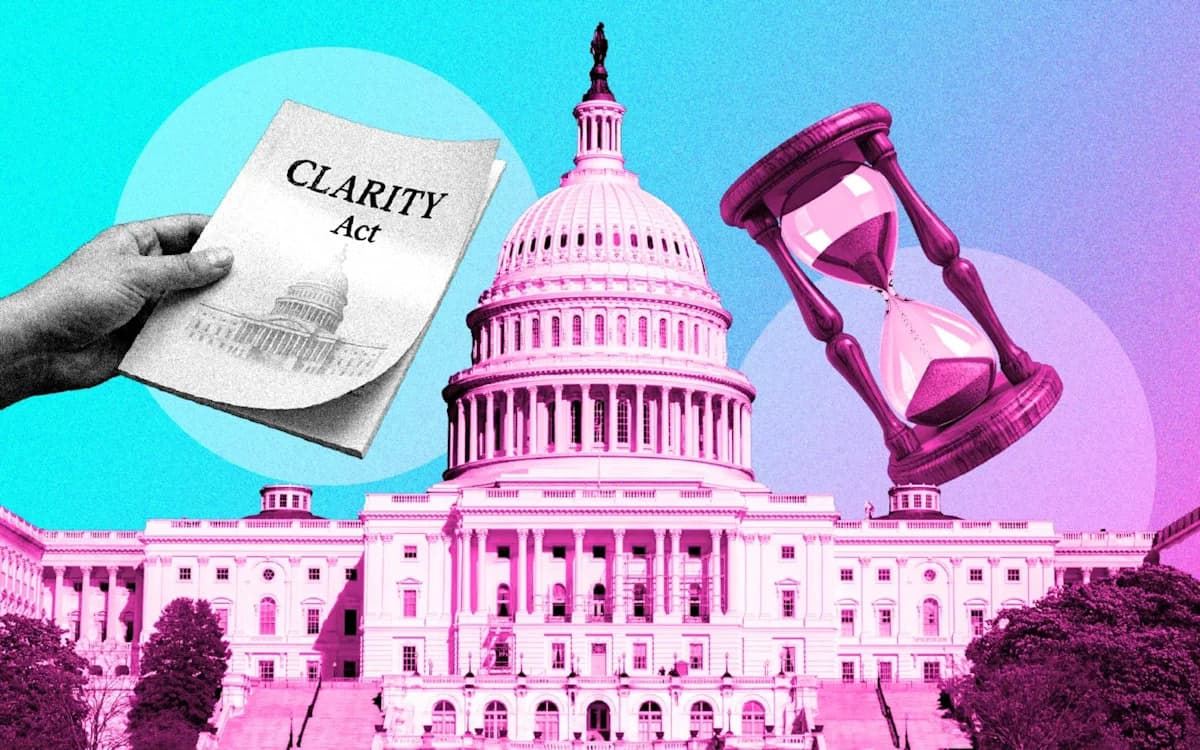
The CLARITY Act has recently caught attention for its potential to redefine the crypto market landscape. However, hidden within its provisions is a significant aspect that has largely gone unnoticed: a ban on a U.S. central bank digital currency (CBDC). This ban is not merely a footnote but a core component of the legislation, indicating its critical importance. Let's delve into what this means for the future of digital currencies and the broader financial landscape.
Understanding the CLARITY Act 📝
The CLARITY Act is primarily known for addressing the classification of crypto tokens as either securities or commodities, a debate that has long divided regulators and market participants. Yet, one of its official titles, the "Anti-CBDC Surveillance State Act," highlights another crucial objective: preventing the Federal Reserve from issuing a retail CBDC.
What is a CBDC? 💡
A central bank digital currency represents a digital form of a country's official currency, issued and regulated by the central bank. Unlike cryptocurrencies such as Bitcoin or Ethereum, a CBDC is a direct liability of the central bank and is equivalent to physical cash but in a digital format. Proponents argue that CBDCs can enhance payment efficiency and financial inclusion, while critics raise concerns about privacy and government surveillance.
The Anti-CBDC Provision Explained 📜
The anti-CBDC provision within the CLARITY Act amends the Federal Reserve Act, imposing several restrictions:
- Prohibits the Fed from issuing a CBDC: The Federal Reserve cannot create a digital dollar without explicit Congressional approval.
- Bans retail CBDC offerings: The provision bars the Fed from allowing individuals to hold accounts directly with it, a necessary feature for a retail CBDC.
- Restricts monetary policy use: A CBDC cannot be used for conducting monetary policy, ensuring the Fed does not unilaterally control digital currency issuance.
These restrictions emphasize a key principle: any movement towards a U.S. CBDC must involve legislative approval, safeguarding against unilateral decisions by the Federal Reserve.
Implications for Stablecoins 💰
The CLARITY Act's prohibition on a U.S. CBDC indirectly benefits the private stablecoin market. By removing the possibility of a government-issued digital dollar, private stablecoins like USDC and USDT face reduced competition. This could solidify their position in the digital payments ecosystem, potentially increasing their adoption and market share.
Financial Privacy Concerns 🔍
One of the central arguments against a U.S. CBDC is the potential erosion of financial privacy. A CBDC could allow the government unprecedented access to individual transaction data, raising concerns about surveillance and personal freedoms. The CLARITY Act addresses these concerns by ensuring that any move towards a digital dollar involves public debate and legislative scrutiny.
The Political Landscape and Future Prospects 🏛️
The push against a U.S. CBDC is part of a broader political strategy, with similar bans advancing through other legislative channels. This reflects a growing apprehension about central bank digital currencies among certain political circles. However, the debate is far from over, as technology continues to evolve, and the global financial system adapts to new digital realities.
Global Trends and Comparisons 🌍
Globally, numerous countries are exploring or implementing their own CBDCs. For instance, China has been at the forefront with its digital yuan, aiming to modernize its payment systems and increase the yuan's international presence. The U.S., with the CLARITY Act, takes a divergent path, focusing on safeguarding privacy and supporting private innovation.
Conclusion: A Pivotal Moment in Digital Currency Regulation 🏁
The CLARITY Act's ban on a U.S. CBDC is a significant development in the regulation of digital currencies. By prioritizing legislative oversight and protecting private stablecoins, the Act shapes the future of digital finance in the United States. As the world grapples with the implications of digital currencies, the U.S. approach under the CLARITY Act underscores the importance of balancing innovation with privacy and regulatory oversight.
The debate over CBDCs and their role in the financial system is ongoing. Stakeholders, from policymakers to consumers, must remain informed and engaged as the landscape continues to evolve. Whether the CLARITY Act's provisions will stand the test of time remains to be seen, but its impact on the digital currency debate is undeniable.
You May Also Like

Regulation
Bybit's Historic Lawsuit Against North Korea
August 10, 2026

Regulation
The Five-Second Exploit That Cost Polymarket Millions
August 10, 2026
Regulation
Wintermute's SEC Approval: Crypto Market Makers Go Mainstream
August 10, 2026

Regulation
CLARITY Act September 15 Vote: What's at Stake
August 10, 2026