Category:
AltcoinsXRP Undervalued? Seven Spot ETFs & $1.4B Flows Tell
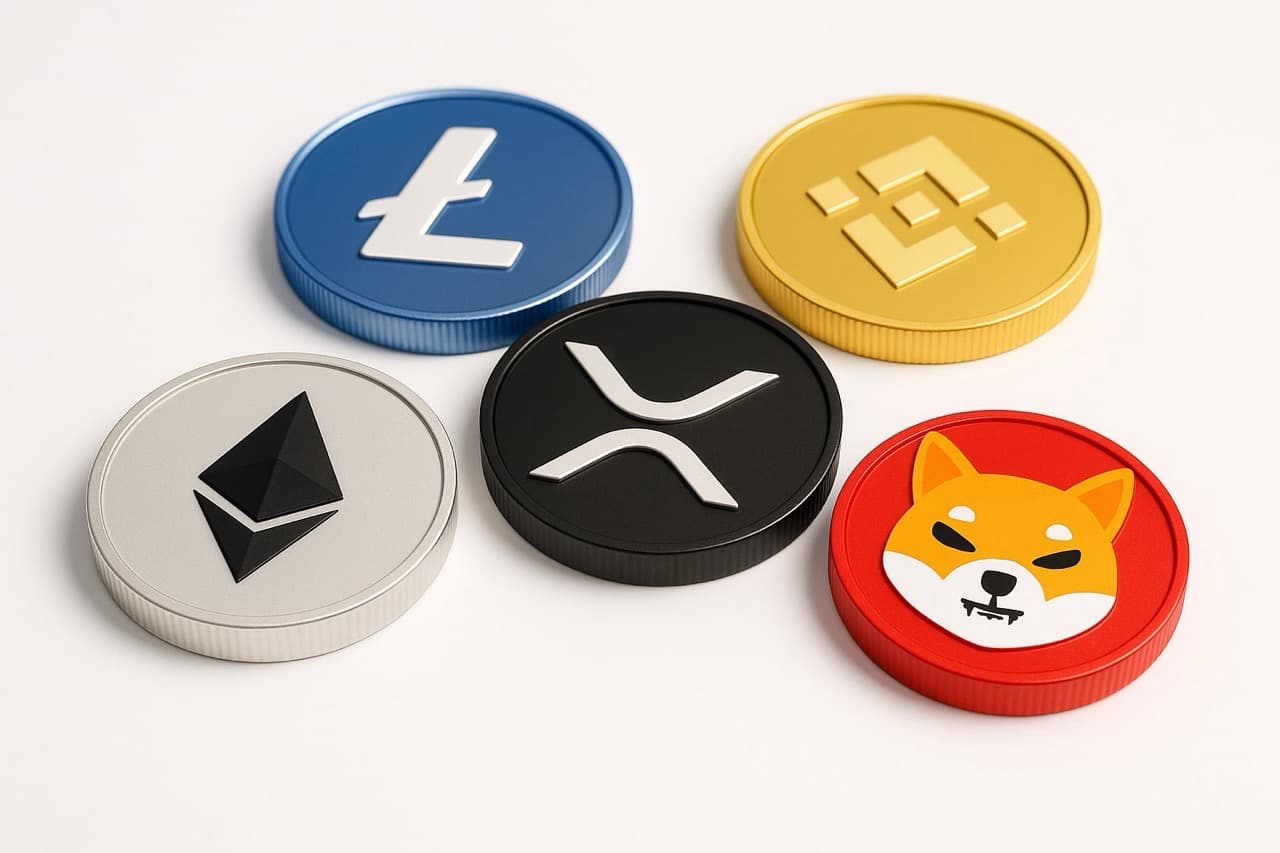
The Institutional Surge Behind XRP's Recovery 📈
XRP has experienced a remarkable resurgence in 2026, climbing 56% in a single week to reclaim the $1.48 price level—marking its strongest weekly performance since the post-SEC settlement rally of August 2025. Yet this impressive rally masks a more compelling narrative: despite surging back into the top five cryptocurrencies by market capitalization, XRP remains 57% below its July 2025 cycle peak of $3.65. The question driving market discussions isn't whether XRP has recovered—it clearly has—but whether the infrastructure supporting it suggests the token is still significantly undervalued.
The institutional landscape surrounding XRP has transformed dramatically. Seven regulated spot exchange-traded funds now trade on US exchanges, collectively holding approximately $1.44 billion in assets under management. A joint SEC and CFTC framework has classified XRP as a digital commodity, removing years of regulatory uncertainty. Whale wallets have accumulated 380 million XRP tokens in single weeks. Ripple is expanding its stablecoin lending operations. The gap between what this infrastructure suggests and what the current price reflects represents the central tension in today's XRP valuation debate. 🔍
Understanding the ETF Infrastructure Gap 💰
The timeline of XRP spot ETF launches reveals how quickly institutional access has expanded. The first product, REX Osprey's XRPR, began trading in September 2025. By the end of that year, six additional funds had launched: Bitwise (November 20), Franklin Templeton's XRPZ (November 24), Canary's XRPC, Grayscale's GXRP, 21Shares' TOXR, and a second REX offering. Within just 16 weeks, cumulative inflows exceeded $1 billion—an unprecedented pace for an altcoin ETF complex.
However, the absolute dollar figure tells only part of the story. The critical metric is relative penetration. Bitcoin's spot ETF complex, which launched 20 months earlier in January 2024, holds nearly $52 billion in cumulative net inflows—representing approximately 6.5% of Bitcoin's total market capitalization. XRP's $1.44 billion in ETF assets represents just 1.9% of the token's $92 billion market cap. This 3.4x difference in penetration rates suggests that institutional adoption of XRP through regulated products remains in its infancy compared to Bitcoin's established infrastructure.
What makes this gap particularly significant is that it's not simply a function of time. Ethereum's spot ETFs, which launched in July 2024—only two months before XRP's first products—attracted substantially larger flows in their first year. Yet during periods when both Bitcoin and Ethereum ETFs experienced outflows, XRP funds demonstrated remarkable resilience. In December 2025, while Bitcoin ETFs lost $1.09 billion and Ethereum products shed $564 million, institutions poured $483 million into XRP funds. This rotation pattern indicates something crucial: capital is flowing into XRP as a distinct allocation thesis, not simply riding a broader crypto market wave.
Fee Competition and Market Accessibility 🎯
The competitive dynamics among the seven XRP ETF issuers mirror the aggressive fee compression that characterized Bitcoin's ETF market during 2024. Franklin Templeton's XRPZ launched with a fee waiver that reduced its effective expense ratio to zero for the first year—a strategic move designed to rapidly accumulate assets. Bitwise positioned its XRP fund at 0.20%, matching its Bitcoin ETF pricing. Grayscale's GXRP, converted from a closed-end trust structure, carries a higher fee but benefits from an existing holder base that requires no new allocation decisions.
This fee compression matters because it removes a historical friction point that kept capital on the sidelines. Institutional investors can now access XRP exposure at costs comparable to traditional equity ETFs—eliminating one of the traditional objections to altcoin allocations. The result is that both retail and institutional investors face fewer barriers to entry, potentially accelerating adoption as more advisors add XRP to model portfolios.
The composition of the buyer base provides additional context. Quarterly 13F filings from Q1 2026 reveal that registered investment advisors and multi-family offices account for a disproportionately large share of XRP ETF holdings relative to Bitcoin ETFs, where hedge funds and proprietary trading firms dominate. This distinction carries important implications: the advisor channel exhibits stickier capital. Once an allocation enters a model portfolio, it typically remains until the underlying thesis breaks, rather than oscillating with quarterly rebalancing cycles. This suggests that XRP's institutional flows may prove more durable than typical altcoin capital movements. 🏢
The Regulatory Framework That Removed Legal Uncertainty ⚖️
On March 17, 2026, the SEC and CFTC released a joint 68-page interpretive document that fundamentally altered XRP's regulatory status. The framework classified 16 crypto assets as digital commodities, including Bitcoin, Ethereum, Solana, and XRP. This classification applied a function-driven assessment examining network decentralization, token utility, and distribution mechanics.
For XRP specifically, this ruling resolved a legal question that had shadowed the asset since December 2020, when the SEC filed suit against Ripple Labs alleging that XRP sales constituted unregistered securities offerings. While Judge Analisa Torres' July 2023 partial summary judgment had narrowed the regulatory risk by ruling that programmatic sales of XRP on exchanges did not constitute investment contracts, lingering uncertainty persisted. The March 2026 commodity classification eliminated that ambiguity entirely.
This regulatory clarity carries enormous implications for institutional participation. Securities classification creates compliance complexity and regulatory risk that many institutional investors cannot accept. Commodity classification, by contrast, operates within well-established regulatory frameworks that financial institutions understand and have integrated into their compliance infrastructure. The shift from legal uncertainty to regulatory clarity represents a one-time event that removes a ceiling on institutional participation—a ceiling that existed for no other major cryptocurrency.
Whale Accumulation and Market Positioning 🐋
Large holder accumulation patterns provide another lens through which to evaluate XRP's valuation. During the week of August 18, whale wallets added 380 million XRP tokens—a substantial single-week accumulation that pushed large holder balances past 16.36 billion tokens. Notably, this aggressive accumulation occurred while the price barely moved, suggesting that sophisticated investors were acquiring XRP without creating the price pressure that typically accompanies large purchases.
This behavior contrasts sharply with panic selling or distribution patterns. When whales accumulate during periods of price stability or weakness, it typically reflects conviction in future appreciation rather than tactical positioning. The timing of this accumulation—immediately preceding the 56% weekly rally—raises questions about whether informed participants possessed advance knowledge of catalysts or simply recognized the emerging valuation opportunity.
The whale concentration data also reveals something about market structure. When a significant percentage of circulating supply rests in large holder wallets, it reduces the available float and can amplify price movements once institutional demand begins flowing through the ETF channels. This supply-demand dynamic could explain why XRP's rally accelerated so sharply once the week of August 14 began—the available supply had already tightened through whale accumulation.
RLUSD Stablecoin and the Expanding Ripple Ecosystem 💳
Ripple's strategic expansion into stablecoin lending operations represents a critical but often overlooked development in the XRP narrative. The company is building lending infrastructure on its own ledger, creating use cases that drive demand for XRP as the native asset. This development parallels how Ethereum's DeFi ecosystem created sustained demand for ETH, or how Solana's developer ecosystem drove SOL adoption.
The RLUSD stablecoin expansion signals Ripple's intent to build an integrated financial ecosystem rather than simply maintaining XRP as a speculative asset. When stablecoin lending occurs on the XRP Ledger, it creates native demand for XRP tokens—demand that exists independent of speculative trading or institutional allocation decisions. This represents a qualitative shift in XRP's value proposition, moving it closer to the utility-driven models that characterize Ethereum and Solana.
The timing of this expansion coincides with the regulatory clarity provided by the commodity classification. With legal uncertainty removed, Ripple can confidently build financial infrastructure without regulatory risk. This combination—regulatory clarity plus expanding ecosystem utility—creates a compounding effect that could justify higher valuations over time.
Catalyst Events on the Horizon 🚀
Ripple's combined Swell and XRPL Apex conference scheduled for October 27-29 in New York represents a significant near-term catalyst. The event is expected to draw 1,500 attendees and feature over 75 speakers, including Nasdaq CEO Adena Friedman. The participation of major financial infrastructure leaders signals the seriousness with which traditional finance is approaching the XRP ecosystem.
Conference announcements typically include new partnerships, ecosystem developments, or product launches. Given the timing—just weeks after the regulatory classification and the recent price rally—Ripple likely has significant announcements planned. The presence of Nasdaq leadership specifically suggests potential developments around trading infrastructure, settlement systems, or institutional integration.
These catalysts matter because they can either validate or invalidate the undervaluation thesis. If Ripple announces meaningful partnerships with major financial institutions or significant ecosystem developments, the case for XRP appreciation strengthens considerably. Conversely, if announcements prove incremental, the rally could face headwinds. The Q4 2026 period will likely determine whether XRP's current price represents a temporary bounce or the beginning of a sustained revaluation.
The Undervaluation Thesis: What the Numbers Suggest 📊
When examining whether XRP remains undervalued, several metrics point in the same direction:
Relative ETF Penetration: At 1.9% of market cap in ETF holdings versus 6.5% for Bitcoin, XRP's institutional infrastructure remains underpenetrated. If XRP achieved Bitcoin-level ETF penetration, current holdings would represent approximately $6 billion rather than $1.44 billion—a 4.2x increase.
Price Versus Cycle Peak: Trading 57% below the $3.65 cycle peak while possessing superior regulatory clarity and institutional infrastructure suggests a valuation disconnect. Bitcoin, by comparison, typically trades within 20-30% of cycle highs once institutional infrastructure matures.
Whale Accumulation During Stability: Large holders adding 380 million tokens without corresponding price appreciation suggests informed participants recognize value at current levels.
Regulatory Clarity Premium: The commodity classification removed a legal risk premium that previously depressed valuations. Historical precedent suggests assets experience re-rating events when regulatory risk eliminates.
Stickier Capital Base: The predominance of advisor-based holdings suggests lower capital flight risk compared to typical altcoin allocations.
However, the undervaluation argument carries important caveats. XRP's current price of $1.48 already reflects the 56% rally from August 14. Some of the undervaluation premium has already been captured. Additionally, if Ripple's upcoming announcements prove incremental rather than transformative, the rally could reverse. The undervaluation thesis remains conditional on execution and continued institutional adoption.
What Investors Should Monitor Moving Forward 👀
The next 12 weeks will prove critical for validating or invalidating XRP's undervaluation thesis. Key metrics to monitor include:
- ETF inflows: Watch whether the $1.44 billion in XRP ETF assets continues accumulating or stabilizes. Sustained inflows would support the undervaluation narrative.
- Regulatory developments: Monitor whether other jurisdictions follow the SEC/CFTC framework or introduce conflicting classifications.
- Whale accumulation patterns: Continued large holder buying during price stability would reinforce informed participant conviction.
- Conference announcements: Ripple's October event will likely determine Q4 momentum.
- Ecosystem development: Track RLUSD adoption and new partnerships on the XRP Ledger.
- Price action relative to Bitcoin and Ethereum: XRP's performance relative to other major assets will indicate whether capital is flowing into XRP specifically or broadly into crypto.
The Bottom Line: Undervalued, But With Conditions 🎬
The evidence supporting XRP's undervaluation is substantial but not overwhelming. Seven regulated ETFs holding $1.44 billion in assets represent genuine institutional adoption, yet penetration rates lag Bitcoin significantly. The commodity classification removed a regulatory ceiling that no other major asset faced. Whale accumulation patterns suggest informed participants recognize value. The expanding RLUSD ecosystem creates new utility-driven demand.
Yet this undervaluation, if it exists, may be partially conditional on continued execution. Ripple must convert regulatory clarity into ecosystem growth. The stablecoin lending operations must achieve meaningful adoption. The October conference must deliver announcements that justify institutional confidence. If these conditions hold, XRP's current price—57% below cycle highs despite superior institutional infrastructure—could represent a genuine opportunity.
Investors considering XRP exposure should recognize that the undervaluation case rests on forward-looking assumptions about adoption and ecosystem development, not on current earnings or cash flow metrics. This makes XRP a conviction play for those who believe Ripple can execute on its vision for a global financial network powered by the XRP Ledger. For investors requiring more immediate fundamental support, the undervaluation thesis may prove premature. The coming months will clarify which narrative prevails. ✨
You May Also Like
Altcoins
NCT Price Surge 200% on Upbit KRW Listing
August 26, 2026

Altcoins
WBT Reaches New All-Time High as Crypto Infrastructure Turns Institutional
August 26, 2026
Altcoins
Pi Network's August 24 Pricing Shakeup: End of Subsidized App Building
August 25, 2026

Altcoins
Zcash Price Hits 8-Year High: What Drove ZEC to $885?
August 24, 2026