Category:
Market AnalysisBittensor (TAO) Halving Impact: 2026 Price Prediction

As the cryptocurrency market evolves, significant events like halvings often stir both excitement and speculation. The Bittensor (TAO) halving in December 2025 was no exception. This article delves into what this event means for TAO’s future, specifically its price prediction for 2026.
Understanding the Bittensor Halving
Bittensor is an innovative platform designed to be an open marketplace for machine intelligence. It allows models, compute, and data to compete within specialized markets called subnets. The Bittensor ecosystem uses TAO as its settlement token, rewarding useful computational work and securing the network through staking.
The halving in December 2025 marked a pivotal moment for Bittensor, reducing daily emissions from 7,200 to 3,600 TAO. This move mirrors the halving mechanism familiar to Bitcoin enthusiasts, aimed at controlling inflation by reducing the rate at which new tokens enter circulation.
Supply Dynamics and Market Impact
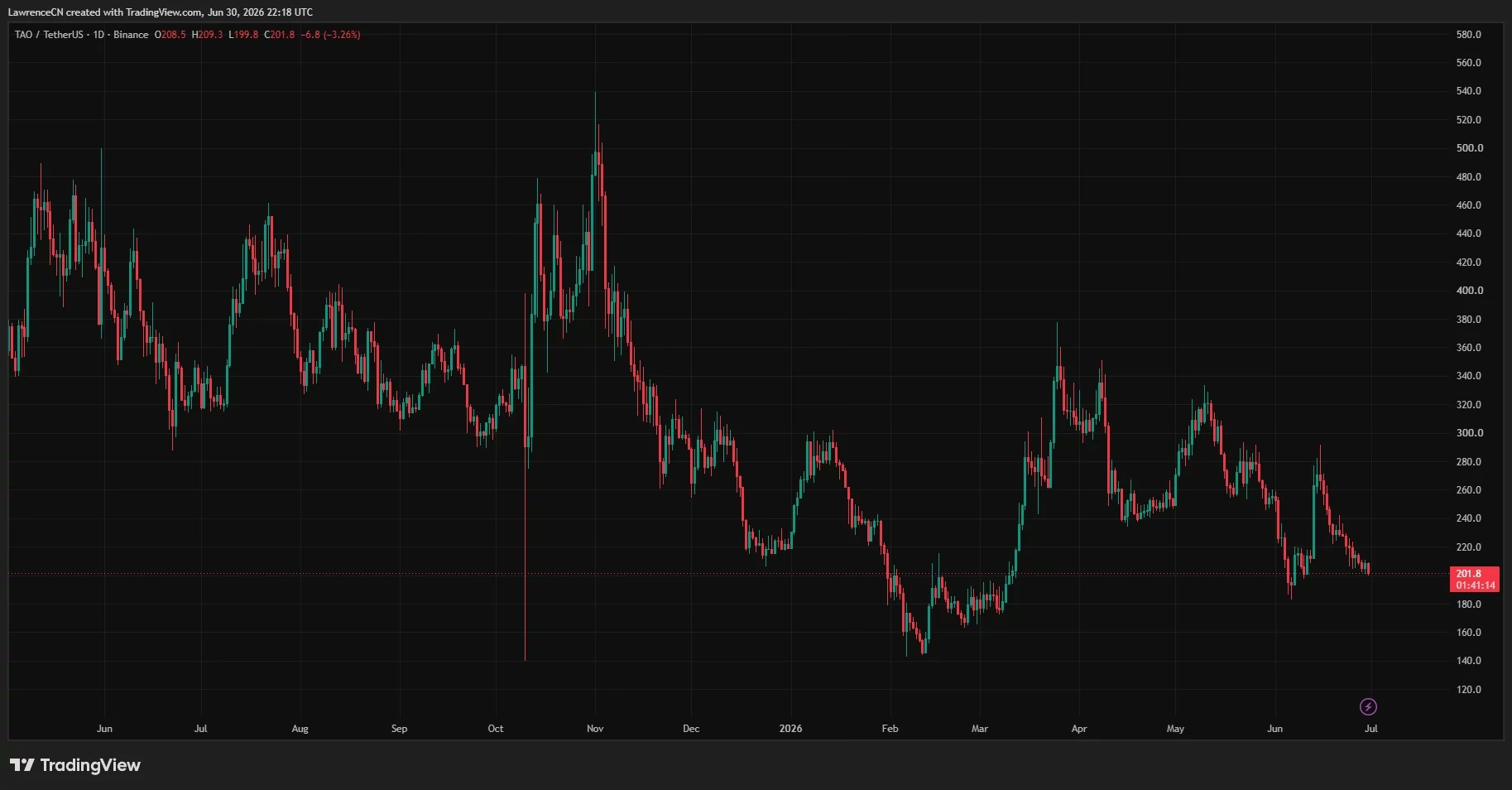
Theoretically, halving events tighten the supply side, creating potential upward pressure on price if demand remains constant or grows. In Bittensor's case, around 70% of the TAO supply is staked, providing a yield of approximately 10% per annum. This staking behavior effectively reduces the liquid supply available for trading, making the float unusually thin compared to similar cryptocurrencies.
The bull case for TAO hinges on sustained or increased demand in the face of reduced supply. If investors and users continue to hold and stake TAO, the reduced emissions could indeed lead to upward price movements.
Challenges and Bearish Concerns
However, the halving alone does not guarantee a price increase. A critical aspect to consider is whether the demand for TAO can keep pace. The halving is a well-known event, and its effects may have already been priced in by the market. Furthermore, the broader context of Bittensor's utility, particularly the value generated by its subnets, plays a crucial role.
Analyst Predictions for 2026
Market analysts have varying opinions on where TAO might be headed. Some forecasts, such as those from Gate, suggest an average price around $236, while others, like Coinpedia, anticipate a recovery towards $500. The divergence in predictions underscores the uncertainty surrounding TAO's future, heavily influenced by factors beyond the halving.
Key Factors Influencing TAO's Price
- Subnet Revenue: The real-world value generated by Bittensor's subnets is pivotal. If these subnets succeed in capturing sustained economic demand, TAO could see substantial gains.
- ETF Flows: Institutional interest, potentially spurred by Exchange-Traded Funds (ETFs), could introduce new liquidity and demand.
- Broader AI Market Trends: As a proxy for AI enthusiasm, TAO's price may also be affected by the broader narrative around artificial intelligence and its applications.
Conclusion: Navigating the TAO Landscape
The December 2025 halving was a significant milestone for Bittensor, but it is not the sole determinant of TAO's price trajectory. While the reduction in supply is a positive structural shift, the key to future price movements lies in demand dynamics.
Investors should watch for developments in Bittensor's subnet utility, market interest in AI technologies, and potential institutional involvement. The interplay of these factors will likely define TAO's market performance in 2026 and beyond.
In conclusion, while the halving sets the stage, the real drama unfolds in how effectively Bittensor can position itself within the rapidly evolving landscape of machine intelligence.
You May Also Like

Market Analysis
Bitcoin Price Slips Below $65K After US Jobs Data
August 9, 2026

Market Analysis
XRP Price Risks $1 Breakdown as ETF Demand Fades
August 8, 2026

Market Analysis
Bitcoin Price Stalls at $65K: Holder Selling Risk Intensifies
August 8, 2026

Market Analysis
SpaceX Stock Rallies 14% as Lockup Fears Fade
August 8, 2026