Category:
EthereumEthereum Rejects $2,000 as Market Tests $1,850 Support
Ethereum's recent attempt to surpass the $2,000 mark has seen a setback, with prices retreating to around $1,880. This decline follows a broader sell-off in the technology sector, which has significantly impacted market sentiment. As Ethereum struggles to defend its $1,850 support level, investors and traders are watching closely for signs of a potential rebound.
The Tech Rout and Its Impact on Ethereum 📉
The technology sector's recent downturn has put pressure on Ethereum's price, exacerbating its struggle to maintain upward momentum. The sharp decline in leading tech stocks, which saw a 4.8% drop in the Magnificent Seven, wiped out approximately $797 billion in market value. This sell-off was triggered by factors such as Alphabet's increased capital spending forecast and Tesla's disappointing profits.
Ethereum, known for its volatility, absorbed a more significant loss compared to Bitcoin, highlighting the cautious approach investors are taking towards altcoins. This shift in capital reflects a broader risk-averse sentiment as the market navigates through uncertain economic conditions.
ETF Inflows: A Silver Lining for Ethereum 📈
Despite the bearish market conditions, Ethereum continues to attract interest from institutional investors. Spot Ethereum ETFs recorded $26.3 million in net inflows, marking a positive trend over five consecutive sessions. Notable contributions came from BlackRock’s ETHA, Fidelity’s FETH, and Grayscale’s mini Ether fund.
These inflows indicate a sustained interest in Ethereum as an asset class, even as the spot market experiences selling pressure. The consistent demand for ETFs suggests that investors remain optimistic about Ethereum's long-term prospects, despite the current market volatility.
Derivatives and Leverage: A Double-Edged Sword ⚔️
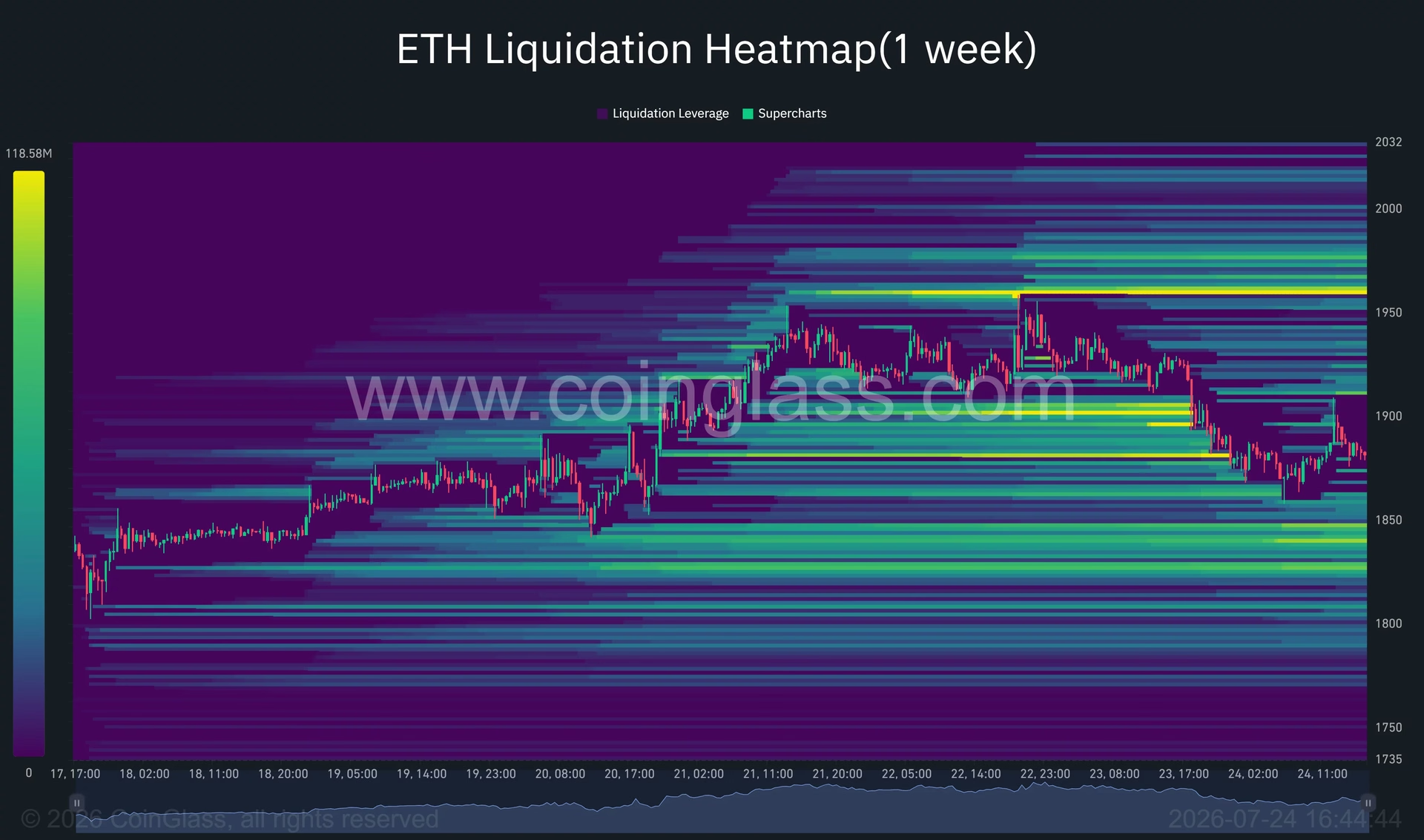
Ethereum's derivatives market has seen increased activity, with open interest rising by 600,000 ETH to a total of 14.6 million ETH. However, this increase in leverage comes with risks, as funding rates briefly turned negative, leading to significant liquidations totaling $41.55 million within 24 hours.
The surge in open interest, coupled with negative funding rates, exposes both bullish and bearish positions to potential forced closures. This dynamic adds another layer of complexity to Ethereum's price movements, as traders navigate a volatile market landscape.
Technical Analysis: Key Levels to Watch 🔍
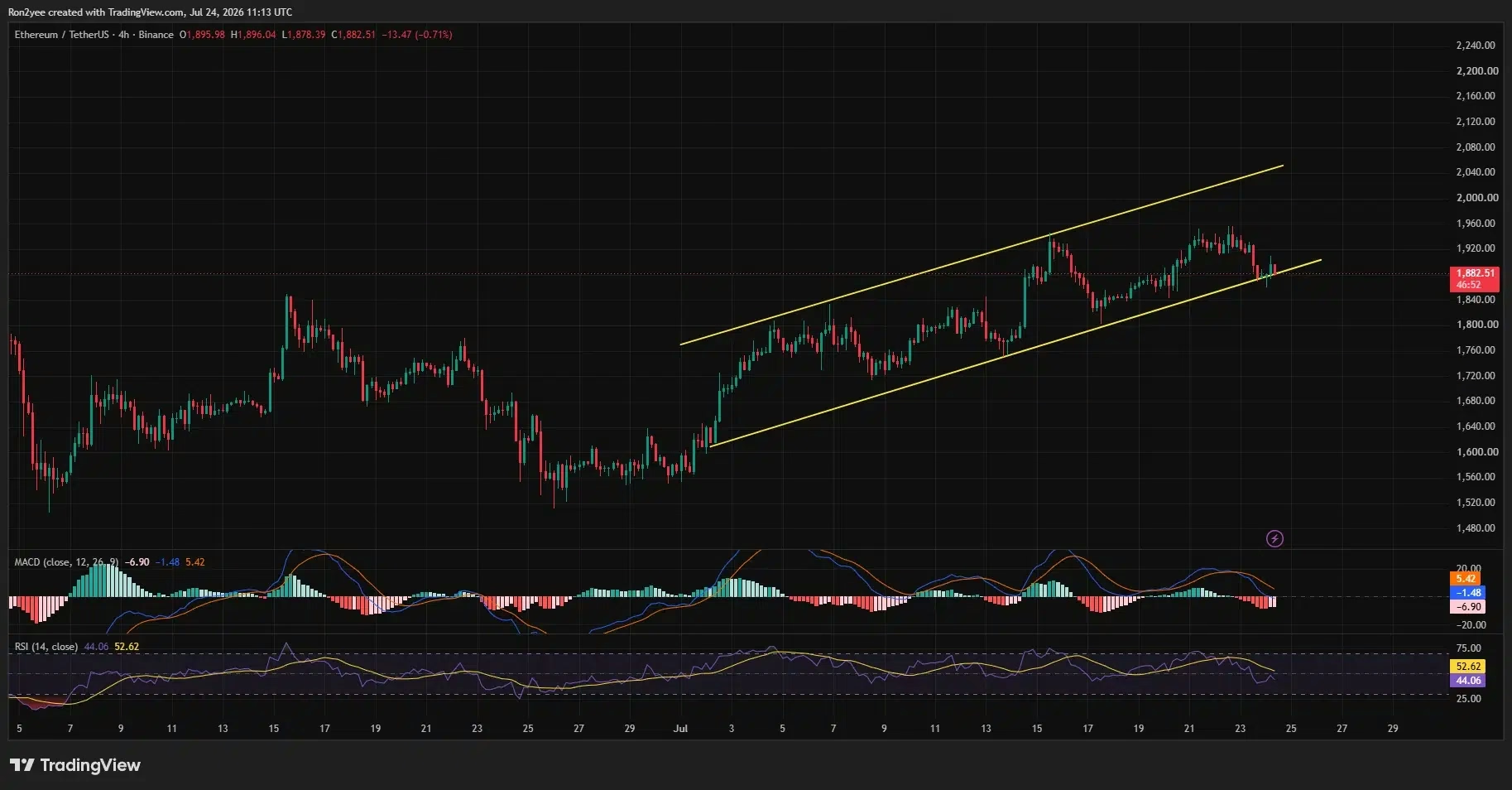
From a technical standpoint, Ethereum's price action is contained within an ascending parallel channel, with critical support between $1,850 and $1,880. Breaking below this range could invalidate the current recovery setup, exposing Ethereum to further downside risks.
The 4-hour relative strength index (RSI) has dipped below its moving average, indicating weak momentum. Additionally, the MACD line remains below its signal line, suggesting that sellers retain control in the short term.
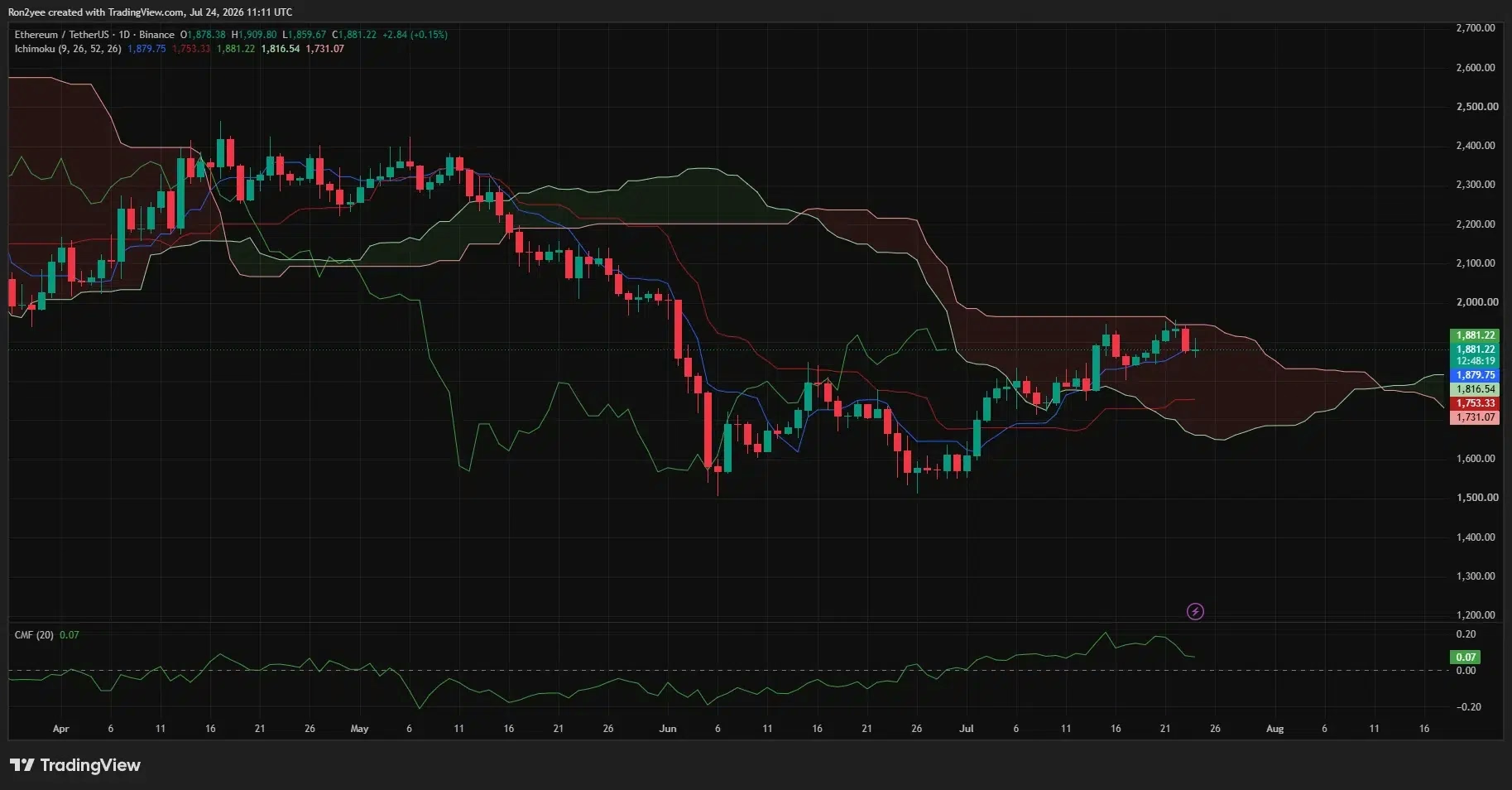
On the daily chart, Ethereum trades near the Ichimoku conversion line at $1,879, maintaining a position above the forward cloud's upper boundary. Despite the pullback, the Chaikin Money Flow indicator remains positive, showing that net capital has not entirely exited the market.
Looking Ahead: What’s Next for Ethereum? 🔮
As Ethereum navigates these turbulent waters, maintaining the $1,850 support level is crucial for a potential rebound. A defense of this level could pave the way for a recovery towards $1,950 and eventually test the $2,000 resistance once again.
Investors should monitor broader market trends, including equity performance and macroeconomic indicators, as these factors will likely influence Ethereum's trajectory. Persistent weakness in equity markets, rising bond yields, or renewed inflationary pressures could pose additional challenges.
In conclusion, while Ethereum faces near-term hurdles, the ongoing interest from institutional investors and the resilience of its technical support levels provide a foundation for potential recovery. As always, traders should remain informed and vigilant as they make decisions in this dynamic market environment.
Disclosure: This article is for educational purposes and does not constitute investment advice.
You May Also Like

Ethereum
ZK Proving Beyond GPUs: The Hardware Evolution Ethereum Needs
August 23, 2026

Ethereum
Whitechain Relaunches as W Group's Distribution-First Ethereum Layer 2
August 20, 2026

Ethereum
BitMine Adds 9,926 ETH as BMNR Stock Surges 3.7%
August 18, 2026
Ethereum
Ethereum Foundation Hires AI Security Researcher
August 9, 2026