Category:
AltcoinsPi Network Surges 5% as CPI Cools and Protocol 26 Passes

Pi Network's Latest Rally: What's Driving the 5% Surge? 🚀
The cryptocurrency market has been buzzing with activity as Pi Network (PI) demonstrated impressive momentum on August 12, climbing more than 5% and approaching the $0.090 threshold. This price movement marks a significant moment for the project, driven by a confluence of favorable macroeconomic conditions and critical network infrastructure upgrades. The token's recent performance signals renewed investor interest in what was once one of the most anticipated blockchain projects.
Trading volume surged approximately 35% during the session, reflecting heightened retail participation and technical interest. While PI eventually settled near $0.088 after giving back some intraday gains, the movement underscores the token's sensitivity to both network developments and broader market sentiment. Understanding the factors behind this rally provides valuable insight into Pi Network's current trajectory and future potential.
Protocol 26 Upgrade: A Critical Milestone for Pi Network 🔧
The successful passage of Protocol 26's August 11 deadline represents a watershed moment for Pi Network's technical evolution. This mandatory upgrade required all Mainnet node operators to install the latest protocol version or face immediate disconnection from the network. The enforcement mechanism was strict: nodes failing to comply would lose Mainnet connectivity, forcing operators to upgrade before regaining access.
Protocol 26 introduces substantial improvements across multiple dimensions of network functionality. Smart contract safety enhancements provide developers with more robust security frameworks, reducing vulnerability vectors that have plagued other blockchain platforms. State management improvements streamline how the network tracks and validates transaction history, while interoperability upgrades enable better communication with external blockchain ecosystems.
Cryptographic function enhancements represent another critical component of this upgrade. These improvements strengthen the mathematical foundations underlying Pi Network's security model, making the network more resistant to emerging attack vectors. Importantly, Protocol 26 also serves as a preparatory step for Protocol 27, which the development team has designated as the final planned upgrade in the current sequence.
Network Participation and Upgrade Adoption 📊
While no widespread network disruption occurred following the deadline, the Pi Core Team has not yet released comprehensive adoption metrics. This lack of transparency regarding the percentage of nodes successfully upgrading creates some uncertainty about the upgrade's true penetration rate. Market participants remain eager for official data confirming that the upgrade achieved sufficient network-wide participation to prevent fragmentation.
Successful protocol upgrades depend critically on coordinated node operator participation. When adoption rates remain unclear, investors face difficulty assessing network health and the robustness of the upgrade's implementation. The absence of official participation figures represents a missed opportunity for the development team to reinforce market confidence in the network's technical maturity.
Macroeconomic Tailwinds: How Cooling Inflation Supports Risk Assets 📉
Beyond the technical upgrade, Pi Network's price surge benefited significantly from improved macroeconomic conditions. The U.S. Bureau of Labor Statistics released Consumer Price Index data on August 12 showing meaningful deceleration in inflation pressures. The headline CPI increased just 0.1% month-over-month in July, while the year-over-year reading came in at 3.4%—down from 3.5% in June.
Core inflation, which excludes volatile food and energy components, also showed encouraging trends. Monthly core CPI rose 0.2%, while the annual rate settled at 2.5%, down from the previous month's reading. These softer-than-expected inflation metrics have profound implications for monetary policy expectations and risk asset valuations.
The Federal Reserve and Cryptocurrency Markets 🏦
Cooling inflation reduces immediate pressure on the Federal Reserve to pursue aggressive interest rate increases. Market participants increasingly anticipate a pause or potential reversal in the Fed's rate-hiking cycle, which typically supports speculative and risk-oriented assets including cryptocurrencies. Lower interest rate expectations improve liquidity conditions throughout financial markets, making alternative investments like digital assets more attractive relative to traditional fixed-income securities.
However, it's important to note that Pi Network's immediate price response remained predominantly tied to technical factors surrounding the Protocol 26 upgrade and retail trading activity. While macroeconomic conditions provided a supportive backdrop, the token's specific 5% gain appears driven more directly by network-specific developments and short-term trading momentum.
Technical Analysis: Where Does PI Go From Here? 📈
Key Support and Resistance Levels
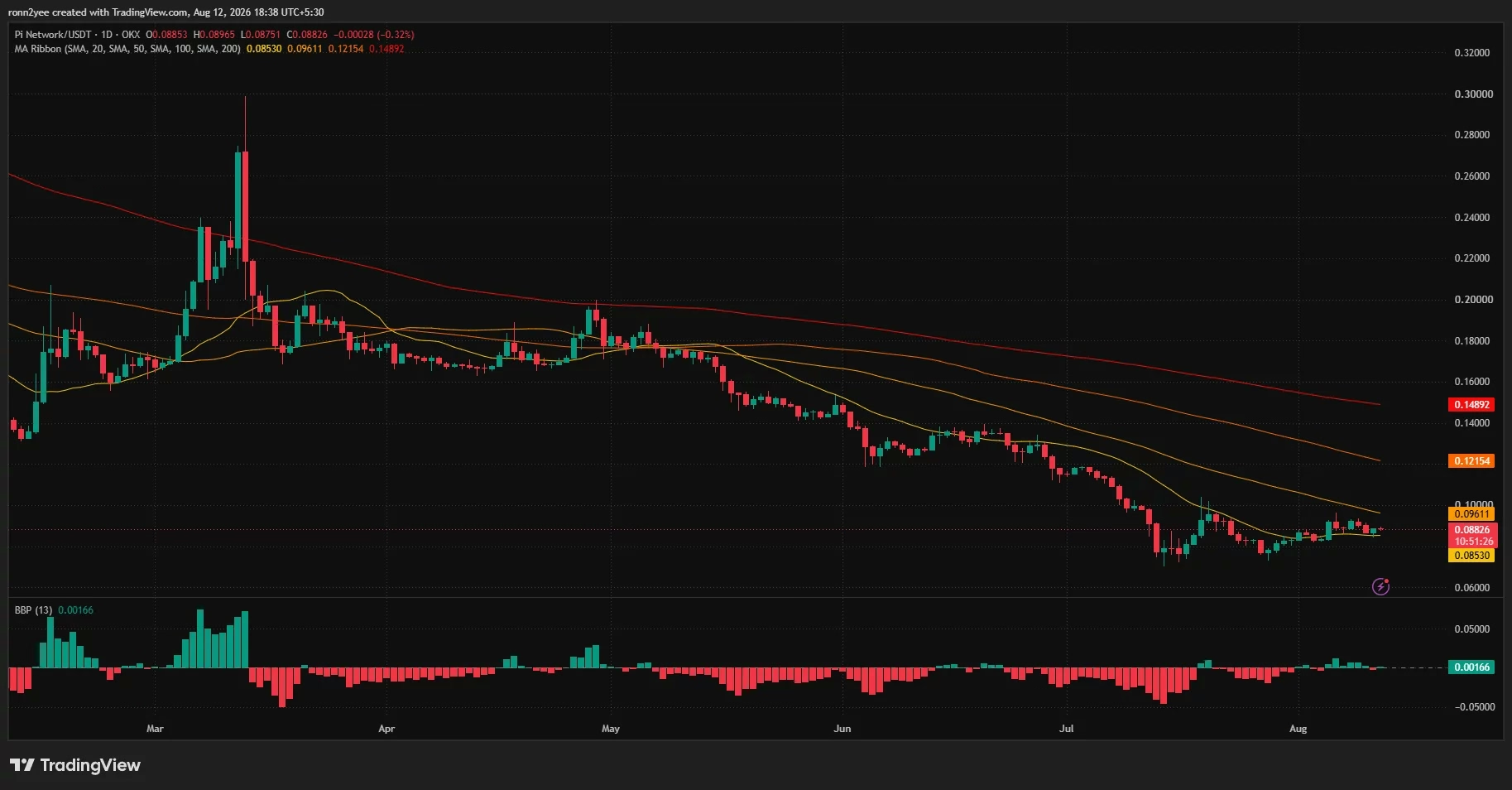
Pi Network's daily chart reveals a developing recovery pattern after an extended downtrend. The token now trades above its 20-day simple moving average at $0.0853, marking an important technical improvement. This level represents the first significant support zone, and maintaining above it strengthens the bullish narrative.
However, PI remains substantially below both the 50-day moving average at $0.0961 and the 100-day average at $0.1215. The 200-day moving average sits even higher at $0.1489, reflecting the broader bearish trend that has dominated since March when the token traded above $0.20. This multi-layered resistance structure presents a formidable challenge for bulls attempting to establish a sustained recovery.
Bull-Bear Power and Momentum Indicators 🔍
Bull-bear power indicators have turned slightly positive at 0.00166, suggesting that buyers have gained limited control around current price ranges. This modest positive reading indicates improving momentum without confirming a decisive trend reversal. Short-term traders should view this development as an early-stage recovery signal rather than confirmation of a major directional shift.
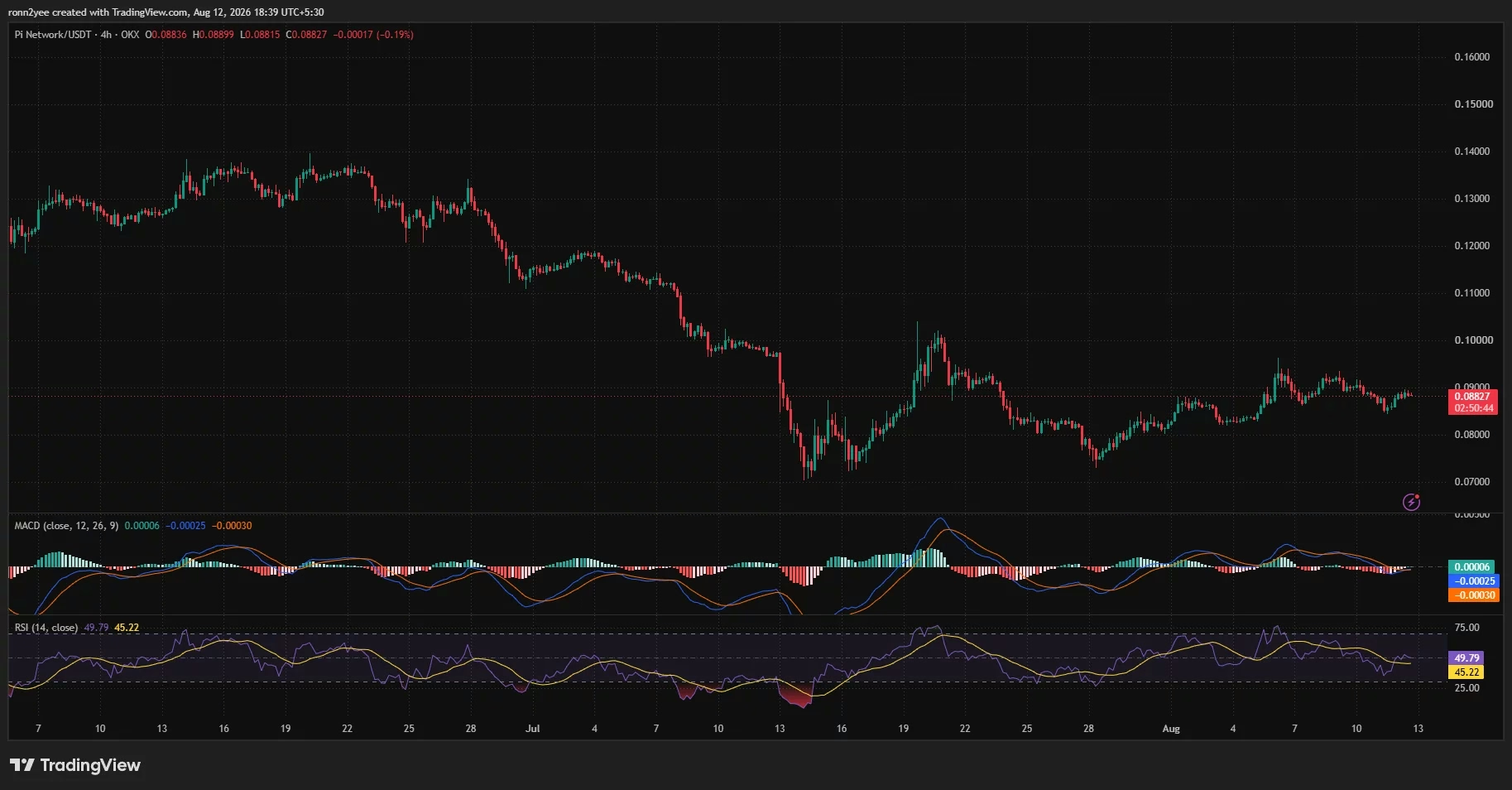
On the 4-hour timeframe, the Relative Strength Index stands at 49.79, just below the neutral 50 level. This reading demonstrates that selling pressure has eased but strong bullish momentum has not yet materialized. The MACD indicator offers slightly more constructive signals, with its histogram turning positive at 0.00006 as the MACD line crossed above the signal line. Both indicators remain below zero, however, pointing to an early recovery attempt rather than a confirmed breakout.
Price Targets and Breakout Scenarios 🎯
Technical analysts have identified a compelling triangle pattern forming on Pi Network's charts. According to prominent crypto analyst Crypto With Gopal, PI is compressing between descending resistance and rising support, creating a large triangle formation. A clean break above approximately $0.10 could trigger a substantial move targeting $0.15.
This ambitious target would require PI to successfully reclaim its 50-day moving average at $0.0961, followed by the 100-day average near $0.1215, before challenging the 200-day average. Each of these levels represents meaningful resistance that has repeatedly rejected buyer attempts during the extended downtrend.
Immediate Price Targets for Short-Term Traders
Bullish scenario: A daily close above $0.096 would strengthen the recovery case and place the psychological $0.10 level in focus. Clearing both barriers could allow buyers to target the 100-day average near $0.1215, with the analyst's $0.15 target representing a longer-term objective.
Bearish scenario: Failure to hold $0.0853 would weaken the current setup considerably. Sellers could then test $0.080, followed by the July support area between $0.071 and $0.075. Another move toward these lows would invalidate the recovery narrative and suggest further downside pressure.
Supply Concerns and Long-Term Headwinds ⚠️
Despite recent positive momentum, significant headwinds could limit Pi Network's upside potential. Data from PiScan indicates that approximately 775.8 million PI tokens could be unlocked by the end of 2026. While token unlocks don't guarantee immediate selling, they substantially increase the amount of PI available in the market if recipients choose to liquidate their holdings.
This supply overhang represents a critical risk factor that investors must consider. Large unlock events have historically created selling pressure on cryptocurrency projects, particularly when price momentum falters. The potential introduction of hundreds of millions of tokens into circulation could suppress price appreciation even if fundamental developments prove positive.
Historical Context: The Dramatic Decline from Peak Valuations 📉
Pi Network's current price sits more than 95% below its February 2025 peak, illustrating the dramatic correction the token has experienced. This massive drawdown leaves PI exposed to sharp price swings as short-term traders respond to technical breakouts and project updates. The token's extreme distance from all-time highs means that even substantial percentage gains translate to relatively modest absolute price movements.
Market Implications and What Investors Should Watch 👀
Pi Network's recent 5% surge reflects broader market dynamics affecting speculative digital assets. The combination of technical upgrades, softer inflation data, and technical breakout patterns creates a temporarily supportive environment for risk assets. However, several factors warrant careful monitoring:
- Upgrade participation metrics: Official data on Protocol 26 adoption rates remains critical for assessing network health
- Supply unlock schedule: The timing and magnitude of future token unlocks could significantly impact price dynamics
- Macroeconomic trajectory: Federal Reserve policy decisions will continue influencing risk asset valuations
- Technical resistance levels: Whether PI can establish support above key moving averages will determine the sustainability of the recovery
Looking Ahead: The Path Forward for Pi Network 🔮
Pi Network stands at an inflection point. The successful execution of Protocol 26 and the supportive macroeconomic environment have created a temporary window of opportunity for price appreciation. However, the token's position far below its major long-term moving averages and the substantial supply overhang from pending unlocks continue to limit the strength of the bullish case.
Short-term traders should monitor the $0.096–$0.10 resistance zone closely. A decisive break above this level would validate the triangle breakout pattern and potentially trigger the move toward $0.12 and $0.15 that technical analysts have outlined. Conversely, failure to break through this resistance would suggest that the current rally represents merely a temporary bounce within a larger downtrend.
For long-term investors, Pi Network's recent developments highlight the importance of monitoring both technical infrastructure improvements and macroeconomic conditions. The Protocol 26 upgrade demonstrates the project's continued technical evolution, while the supply unlock schedule presents a critical risk factor that could suppress future appreciation. As the cryptocurrency market continues navigating uncertain macroeconomic terrain, Pi Network's ability to maintain technical support levels and manage supply dynamics will ultimately determine whether this current rally represents the beginning of a sustainable recovery or simply another temporary bounce in an extended bear market.
You May Also Like

Altcoins
NCT Price Surge 200% on Upbit KRW Listing
August 26, 2026

Altcoins
WBT Reaches New All-Time High as Crypto Infrastructure Turns Institutional
August 26, 2026

Altcoins
Pi Network's August 24 Pricing Shakeup: End of Subsidized App Building
August 25, 2026

Altcoins
XRP Undervalued? Seven Spot ETFs & $1.4B Flows Tell
August 25, 2026