Category:
BlockchainSui's Quantum-Safe Future: 2027 Mainnet Launch
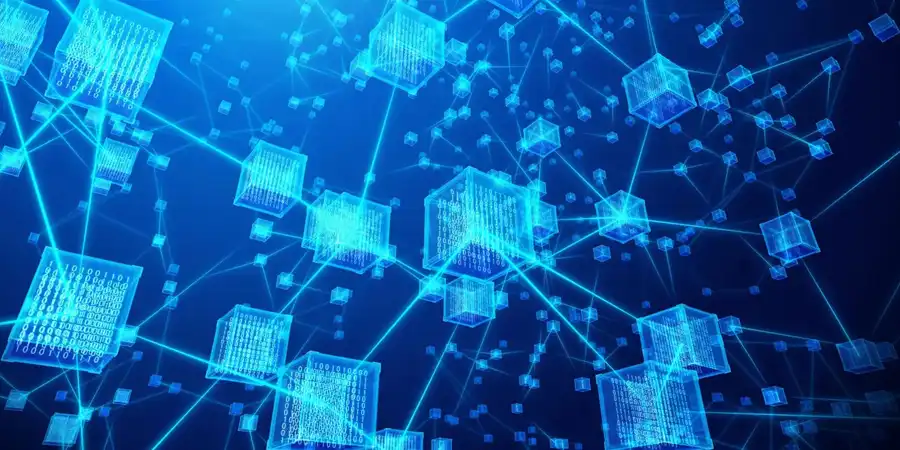
The blockchain industry stands at a critical juncture as quantum computing technology advances at an unprecedented pace. 🚀 Sui, one of the leading Layer 1 blockchain networks, is taking proactive steps to safeguard its ecosystem against potential quantum threats by introducing native quantum-safe account authentication. This strategic initiative represents a significant milestone in blockchain security evolution and demonstrates the network's commitment to long-term resilience.
Understanding the Quantum Computing Threat to Blockchain 🔐
While quantum computers remain largely theoretical for most practical applications, their potential to break current cryptographic systems poses a genuine existential threat to blockchain networks. Traditional public-key cryptography, which forms the backbone of blockchain security, relies on mathematical problems that are computationally difficult to solve with classical computers but could potentially be cracked by sufficiently powerful quantum machines.
The vulnerability is particularly acute in blockchain environments. Unlike traditional systems where public keys remain private until absolutely necessary, blockchain transactions expose public keys on-chain permanently. This creates a dangerous scenario researchers call "harvest-now-forge-later" attacks—where malicious actors can collect exposed public keys today and exploit them once quantum computers become sufficiently advanced. ⏰
Recent research from quantum computing leaders suggests that recovering private keys from exposed public keys could eventually take mere minutes on a fault-tolerant quantum computer using fewer than 500,000 physical qubits. This timeline, though uncertain, has prompted governments and enterprises worldwide to prioritize quantum-safe infrastructure development.
Sui's Two-Algorithm Approach 🛡️
Rather than betting everything on a single quantum-resistant algorithm, Sui has adopted a sophisticated dual-algorithm strategy that significantly reduces risk. This approach demonstrates mature cryptographic thinking and provides multiple layers of protection.
ML-DSA-65 for Standard Accounts: For everyday user accounts, Sui will integrate ML-DSA-65, the Level 3 parameter set defined under NIST's FIPS 204 standard. This lattice-based signature scheme has already gained substantial industry adoption. Chrome and Cloudflare currently use the same security level for post-quantum encryption protecting over half of human-initiated web traffic, while AWS Key Management Service now supports ML-DSA signing. Android 17's Keystore also generates quantum-safe signatures using ML-DSA-65 within secure hardware environments.
Sui's decision to select the higher-security Level 3 option rather than Level 1 reflects lessons learned from cryptographic research. A notable July 2026 incident demonstrated how researchers could reduce the effective security of the HAWK post-quantum signature candidate through AI-assisted attacks, even after expert review. Though this incident didn't affect ML-DSA, it reinforced the importance of choosing stronger security margins. 💪
SLH-DSA-SHA2-128s for High-Value Assets: For protecting high-value smart contract vaults, Sui will implement SLH-DSA-SHA2-128s, a hash-based signature scheme standardized under FIPS 205. By implementing this through Move smart contracts rather than embedding it in the protocol itself, Sui maintains compatibility with future post-quantum standards without requiring core protocol modifications.
The genius of this dual-algorithm approach lies in its redundancy. Lattice-based and hash-based cryptographic families operate on entirely different mathematical foundations. A breakthrough in one wouldn't compromise the other, providing genuine defense-in-depth.
Backward Compatibility: No Wallet Migration Required 🔄
One of Sui's most user-friendly design decisions involves maintaining backward compatibility with existing wallets and recovery phrases. Rather than forcing users to generate completely new wallets, Sui's deterministic key architecture allows quantum-safe private keys to be derived from the same recovery phrases users already securely store.
This means wallet backup and restoration continue functioning through existing seed phrases while new derivation paths generate ML-DSA-65 keys. Users won't need to transfer assets to new addresses or undergo complex migration procedures. Address aliases, already deployed on Sui, enable users to replace their authorization keys with post-quantum keys while maintaining the same wallet address and asset balances. This seamless transition represents a significant usability advantage over potential quantum-safe alternatives. ✨
Government Mandates Accelerating Post-Quantum Adoption 📋
The urgency surrounding quantum-safe cryptography isn't merely theoretical—it's increasingly regulatory. The U.S. National Institute of Standards and Technology previously targeted 2030 for phasing out classical cryptographic algorithms and 2035 for prohibiting them entirely. However, Executive Order 14412, signed in June 2026, accelerated these timelines significantly.
Under this executive order, U.S. federal agencies must deploy post-quantum key establishment by the end of 2030 and post-quantum digital signatures by the end of 2031 for sensitive systems. These mandates are driving enterprise adoption across industries and creating competitive pressure for blockchain networks to implement quantum-safe solutions proactively.
Sui's 2027 mainnet target aligns strategically with these regulatory developments, positioning the network ahead of compliance curves. 📅
Implementation Timeline and Rollout Strategy 🗓️
Sui's rollout strategy demonstrates thoughtful, phased implementation rather than rushing to deployment:
2024-2025: Quantum-safe vaults scheduled for mainnet deployment later this year, allowing high-value asset protection to begin immediately
End of 2026: Native ML-DSA-65 accounts expected to reach testnet, enabling community testing and feedback
Q1 2027: Native account authentication targeted for mainnet launch alongside comprehensive wallet, SDK, and CLI support
The core implementation has already been completed and benchmarked, though independent security audits are currently underway. This measured approach balances innovation speed with security rigor. 🔬
Addressing the Signature Size Trade-off ⚖️
One significant trade-off with post-quantum cryptography involves larger signature and public key sizes compared to current Ed25519 schemes. Post-quantum signatures and public keys occupy substantially more on-chain space, which could theoretically increase transaction sizes across the network.
However, Sui has engineered solutions to minimize this impact. Verification costs remain much closer to existing Ed25519 signatures than larger key sizes might suggest. Transaction size limits and programmable transaction blocks can accommodate the additional data, while ongoing optimization work continues to improve efficiency. This pragmatic approach acknowledges real constraints while demonstrating commitment to solving them. 💡
Industry-Wide Quantum-Safe Movement 🌍
Sui isn't alone in prioritizing quantum security. Similar post-quantum initiatives are underway across the blockchain ecosystem. Bitcoin custody solutions, BNB Chain, and numerous other blockchain projects are actively researching and implementing quantum-resistant security measures. This coordinated industry movement suggests quantum-safe infrastructure will become standard rather than exceptional within the next few years.
What This Means for Sui Users and the Ecosystem 🎯
For Sui users, this development provides peace of mind regarding long-term asset security. The combination of backward compatibility, dual-algorithm protection, and government-aligned timelines creates a compelling security story. Users can upgrade to quantum-safe protection on their own timeline without disrupting existing wallet workflows or asset management practices.
For developers building on Sui, the quantum-safe infrastructure opens possibilities for creating next-generation applications with built-in cryptographic resilience. Smart contracts leveraging SLH-DSA-SHA2-128s can protect high-value operations against potential future threats.
For the broader blockchain industry, Sui's approach demonstrates that quantum-safe security and user experience aren't mutually exclusive. Thoughtful architecture can deliver both. 🌟
Looking Ahead: The Quantum-Safe Blockchain Era 🚀
Sui's commitment to quantum-safe account authentication represents more than a technical upgrade—it's a philosophical stance about blockchain's role in securing value long-term. By proactively addressing quantum threats, implementing government-aligned standards, and maintaining user-friendly workflows, Sui positions itself as a forward-thinking network prepared for cryptographic challenges ahead.
The 2027 mainnet launch target provides a concrete milestone while acknowledging the complexity of quantum-safe implementation. As quantum computing capabilities continue advancing, blockchain networks that have already deployed quantum-resistant infrastructure will possess significant competitive advantages.
The quantum-safe blockchain era is arriving sooner than many anticipated. Sui's strategic roadmap ensures its users and ecosystem are ready. 💫
You May Also Like
Blockchain
The Sandbox Bridge Exploit: $49B Phantom SAND Tokens Explained
August 26, 2026
Blockchain
MANTRA Chain Resumes Blocks After Critical Cosmos-EVM Fix
August 24, 2026

Blockchain
Crypto Card Spending Surges 2.5x to $759M in July
August 19, 2026
Blockchain
African Financial Company Issues Historic $431M Digital Bond
August 17, 2026