Category:
BlockchainSamsung Withdraws from OUSD Consortium

In the ever-evolving landscape of blockchain and cryptocurrency, changes can happen overnight 🌐. One such recent development has been Samsung's unexpected distancing from the OUSD stablecoin consortium, sparking discussions across the industry.
Samsung's Surprising Move 😲
Samsung, a global tech giant, was initially named among over 140 partners in the ambitious Open Standard's OUSD stablecoin project. However, Samsung recently clarified that it never engaged in formal talks with Open Standard. This revelation has cast a shadow over the consortium's legitimacy.
The OUSD initiative was presented as a collaborative effort where member organizations would jointly manage the stablecoin and share in the revenue from its reserve assets. Yet, with Samsung stepping back, questions about the project's transparency and governance are on the rise.
The Consortium's Uncertain Future 🌐
Other potential partners, including Dunamu, Shinhan Bank, and K-Bank, have echoed Samsung's sentiments. They confirmed inquiries from Open Standard but stated they are still evaluating their involvement. This has raised eyebrows about how Open Standard announced these partnerships without formalized agreements.
What is OUSD? 🤔
OUSD is a stablecoin governed by a consortium of organizations. Its value is pegged to a stable asset, typically a fiat currency, to minimize volatility. Stablecoins like OUSD are crucial in providing liquidity and stability within the crypto markets.
The Broader Context: Stablecoin Governance
The controversy around OUSD isn't isolated. It highlights ongoing challenges in consortium-based stablecoin models. Circle's CEO, Jeremy Allaire, pointed out that such models often face slow decision-making processes and misaligned incentives. These pitfalls can stifle innovation and competitiveness, crucial for thriving in the fast-paced crypto world.
Circle's Strategic Expansion 🌟
In contrast, Circle has been expanding its USDC stablecoin services through partnerships with major banks like Standard Chartered. This expansion allows eligible clients to mint and redeem USDC directly, offering seamless access to digital assets alongside traditional banking services.
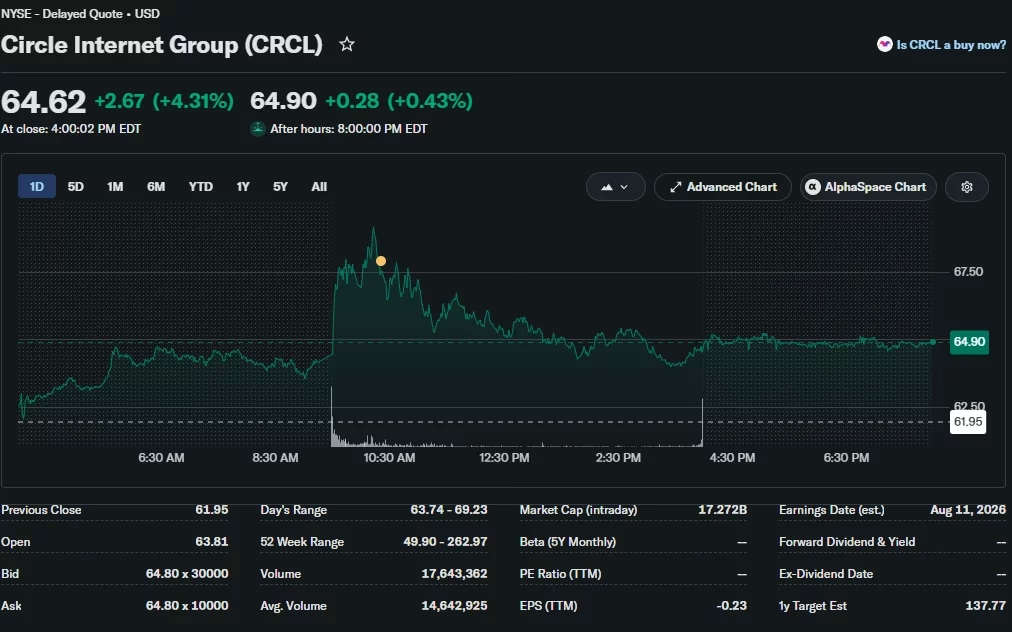
This strategic move by Circle has garnered positive investor sentiment. Circle's shares saw a rebound, reflecting confidence in their business model amid the OUSD turbulence.
Implications for the Crypto Market 📊
These developments underscore the importance of clear communication and formal agreements in blockchain projects. As the crypto market matures, transparency will be key to maintaining trust and encouraging participation from major corporations.
Moreover, the rise of stablecoins continues to be a hot topic in the crypto industry, with regulatory scrutiny increasing. As more projects like OUSD emerge, their governance models will be closely examined.
Conclusion: What Lies Ahead? 🔮
Samsung's withdrawal from the OUSD consortium serves as a cautionary tale for the crypto community. It highlights the need for due diligence, transparency, and strategic partnerships in blockchain initiatives. As the industry grows, these elements will be crucial for building sustainable and innovative projects.
The crypto landscape is dynamic, and while setbacks like these are challenging, they also offer opportunities for growth and improvement. Stakeholders must learn from these incidents to forge a stronger, more transparent future for blockchain technology.
You May Also Like

Blockchain
The Sandbox Bridge Exploit: $49B Phantom SAND Tokens Explained
August 26, 2026

Blockchain
MANTRA Chain Resumes Blocks After Critical Cosmos-EVM Fix
August 24, 2026

Blockchain
Crypto Card Spending Surges 2.5x to $759M in July
August 19, 2026

Blockchain
African Financial Company Issues Historic $431M Digital Bond
August 17, 2026