Category:
Market AnalysisSpaceX Stock Dips Despite Starship Launch Approval

SpaceX's stock recently slipped below the $140 mark, despite the U.S. Federal Aviation Administration (FAA) giving the green light for the next Starship launch. This intriguing shift in market dynamics has caught the attention of investors and market analysts alike, raising questions about the underlying factors influencing SpaceX's valuation.
FAA Clears Starship for Launch 🚀
The FAA's completion of its review into the Starship Flight 12 mishap marks a significant milestone for SpaceX. The regulator has accepted SpaceX's corrective measures, allowing the company to move forward with preparations for the much-anticipated Starship Flight 13. This regulatory approval was expected to boost market confidence, but the stock continues to hover around its recent lows.
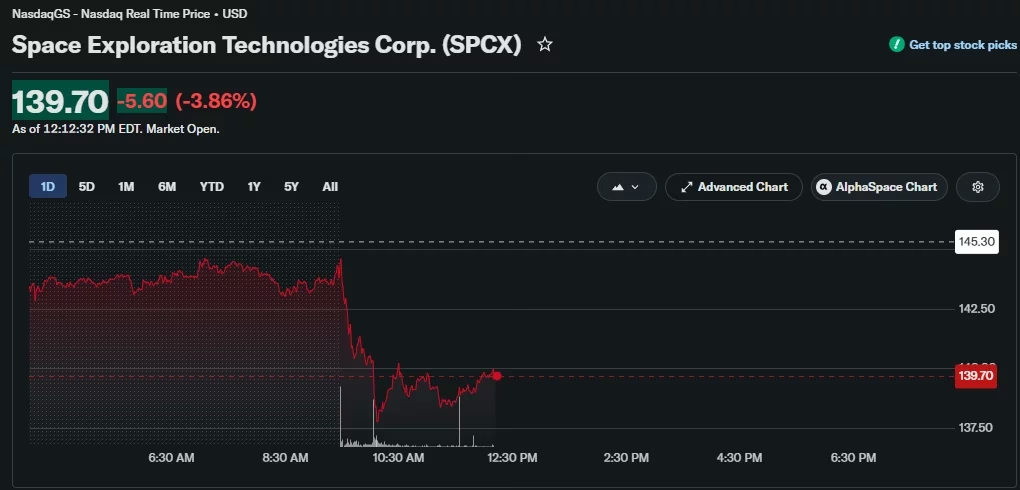
Despite the regulatory green light, SpaceX shares have dipped about 4%, trading near $139, close to the $135 IPO price. This decline has occurred even as the company joined the Nasdaq-100 index, which generally attracts institutional investors and index-tracking funds.
Market Sentiment and Stock Performance 📉
Over the past five trading days, SpaceX's stock has experienced a 12% decline. This downturn is intriguing, given the series of positive developments surrounding the company, including regulatory approvals and index inclusions.
Wall Street's Bullish Outlook 🌟
While the stock's performance has been lackluster, Wall Street analysts remain optimistic. Firms like Raymond James, Morgan Stanley, Goldman Sachs, and Citi continue to issue strong buy ratings. Raymond James, for example, has set an ambitious price target of $800, suggesting a potential upside of over 400% from current levels.
Factors Behind the Stock Dip 🤔
The market's reaction seems to be more focused on recent selling pressure rather than SpaceX's operational progress. The decline may also reflect broader market trends and investor sentiment, which can be influenced by numerous factors such as overall economic conditions, geopolitical tensions, and tech sector performance.
Broader Industry Context 🌐
The aerospace industry is undergoing rapid changes, with companies like SpaceX leading the charge in innovation. The industry's future looks promising, with advancements in satellite deployment, space tourism, and interplanetary exploration. However, the market remains volatile, as seen in SpaceX's recent stock movements.
Upcoming Catalysts and Considerations 🎯
With the FAA's clearance, the upcoming Starship Flight 13 test could serve as a critical catalyst for SpaceX's stock. Successful execution of this mission might restore investor confidence and drive the stock higher. Moreover, as SpaceX continues to innovate and expand its reach, long-term growth prospects remain positive.
Conclusion: A Watchful Eye on Future Developments 👀
Investors should keep a watchful eye on SpaceX's upcoming launches and operational milestones. While recent stock performance may not reflect the company's potential, the aerospace giant's ambitious goals and Wall Street's bullish outlook suggest that there could be significant upside in the long run.
By understanding the broader market trends and keeping track of SpaceX's developments, investors can make more informed decisions in this dynamic industry.
You May Also Like

Market Analysis
XRP Price Falls 5% as Leverage Hits Seven-Month High
August 26, 2026

Market Analysis
Crypto Market Hits Extreme Greed: What This Means for Bitcoin
August 26, 2026

Market Analysis
Ethereum Price Rally Overheats Below $2,550 Resistance
August 26, 2026

Market Analysis
Hyperliquid Price Rally: HYPE Targets $97 Amid $80 Support
August 25, 2026