Category:
Market AnalysisCoinbase Stock Plummets 12% After Q2 Revenue Miss

Market Turbulence Hits Coinbase Hard 📉
Coinbase shares experienced a significant sell-off on Friday, tumbling more than 12% as the cryptocurrency exchange reported disappointing second-quarter financial results. The stock's sharp decline reflects growing investor concerns about the company's growth trajectory and its vulnerability to broader market conditions affecting digital asset trading volumes.
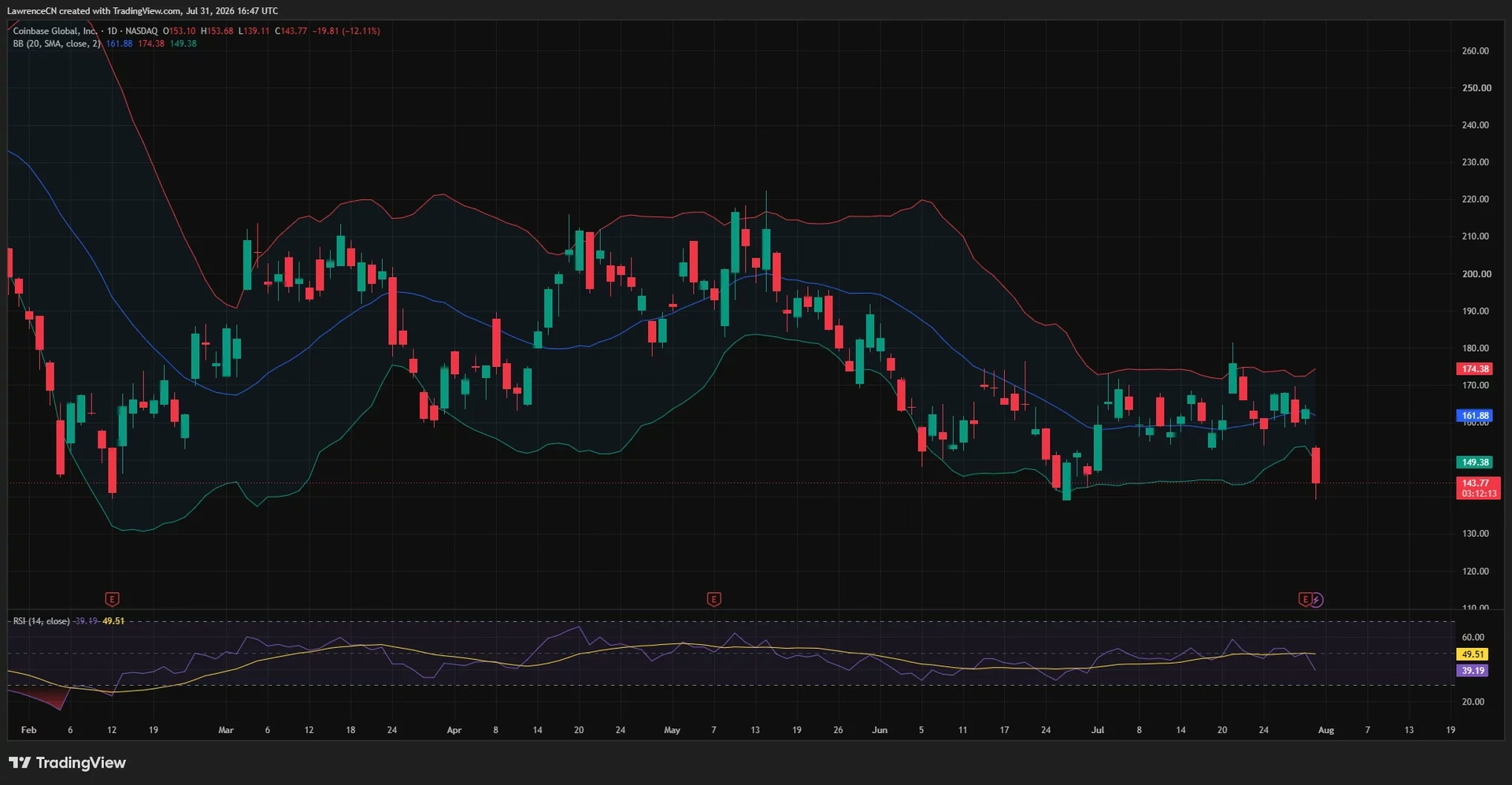
The trading session began with premarket weakness, dropping 5.12% before the opening bell, but the selling pressure intensified throughout the day. COIN closed at $143.77, down $19.81 or 12.11% from the previous session's close of $163.58. The intraday low reached $139.11, marking the stock's lowest point since late June and erasing all of Thursday's modest 2.18% gain.
The Revenue Miss That Shook Confidence 💔
Coinbase's second-quarter revenue reached $1.22 billion, falling short of Wall Street's consensus estimate of $1.29 billion. This disappointing figure represents a concerning 14% decline from the previous quarter and an 18.5% year-over-year decrease. The company also reported a net loss of approximately $359 million, signaling operational challenges beyond the revenue shortfall.
The weakness stems from declining retail and institutional transaction revenues as digital asset trading activity slowed across key markets. Despite these headwinds, Coinbase achieved a notable milestone by capturing a record 10.3% of global cryptocurrency trading volume, up from 9.1% in the first quarter—demonstrating that market share gains alone cannot offset the impact of reduced overall trading activity.
Bright Spots in a Challenging Quarter ✨
While the headline numbers disappointed investors, several positive developments emerged from Coinbase's earnings report. Derivatives activity remained close to record levels, and the company's event contracts and prediction markets revenue surged 106% quarter-over-quarter, reaching an annualized revenue rate exceeding $100 million.
Stablecoin adoption provided another encouraging signal. Average USDC holdings across Coinbase products reached a record $20 billion, representing more than 30% of the stablecoin's total circulating supply. This growing exposure to stablecoins positions Coinbase to benefit from the expanding decentralized finance ecosystem and provides a more stable revenue stream compared to volatile trading fees.
Strategic Pivot: Beyond Trading Fees 🚀
Coinbase CEO Brian Armstrong has explicitly positioned the company's future growth around three key initiatives: stablecoins, the Base blockchain layer-2 network, and prediction markets. These strategic pillars aim to reduce the exchange's heavy dependence on cryptocurrency trading fees, which fluctuate dramatically with market conditions and volatility levels.
The subscription and services revenue segment also represents an important diversification opportunity. By building recurring revenue streams independent of transaction volumes, Coinbase seeks to stabilize earnings and reduce exposure to the cyclical nature of crypto markets. However, Friday's earnings results clearly demonstrate that trading conditions continue to exert substantial influence on overall financial performance.
Technical Analysis: Breaking Key Support Levels 📊
From a technical perspective, Coinbase stock's decline pushed shares below the lower Bollinger Band at $149.38, suggesting the selling move has extended beyond the stock's typical trading range. The daily relative strength index (RSI) dropped to 39.19, below its signal average of 49.51, indicating sharply weakened momentum.
While the RSI remains above the conventional oversold threshold of 30, this technical position leaves room for additional downside pressure if selling continues. Immediate support exists between $139 and $140, where buyers briefly stepped in during Friday's decline. A decisive break below this level could expose the $130–$135 region, which previously supported the stock during February's market turbulence.
On the upside, recovery would require COIN to reclaim the lower Bollinger Band near $149.38, followed by resistance in the $153–$154 range. A sustained rebound above these levels could shift focus toward the Bollinger midpoint at $161.88, approaching Thursday's closing price of $163.58.
Broader Market Headwinds Amplify Pressure 🌍
Coinbase's stock decline occurred amid weakness across the entire cryptocurrency market. Bitcoin fell 1.34% to approximately $63,655, while total cryptocurrency market capitalization declined 1.11% to $2.18 trillion. This broader market softness matters significantly for Coinbase because transaction fees remain intrinsically tied to cryptocurrency prices and trading activity levels.
When volatility contracts or asset prices decline, retail participation typically shrinks, reducing trading volumes and fee generation. Even as Coinbase expands market share, lower overall market activity can still pressure revenues and profitability. This structural relationship between crypto market conditions and Coinbase's financial performance highlights the importance of the company's diversification efforts.
Leadership Transitions Add Uncertainty 🔄
The earnings miss arrives during a period of significant organizational change at Coinbase. The company recently replaced or reassigned four senior leaders following a 14% workforce reduction. Chief People Officer Lawrence Brock is scheduled to depart on August 17, with Dominique Baillet assuming the role. Greg Tusar, co-head of Coinbase Institutional, has transitioned into a policy-focused position.
Additionally, Chief Legal Officer Paul Grewal planned to leave his roles on July 31, with Molly Abraham becoming general counsel and secretary. Ryan VanGrack assumed the newly created position of vice chair and head of corporate affairs. Most recently, Coinbase appointed early company engineer Rob Witoff as chief technology officer on July 28, with Armstrong highlighting Witoff's contributions to making Coinbase "one of the most AI-enabled companies in the world."
These leadership changes introduce uncertainty during a challenging period, though they also suggest management's commitment to positioning the company for long-term innovation and growth beyond traditional cryptocurrency trading.
Key Takeaways for Investors 🎯
Coinbase's 12% stock decline following Q2 earnings reflects the tension between the company's strategic progress and near-term financial headwinds. Several important factors warrant consideration:
Market Share Gains: Coinbase achieved record 10.3% global trading volume share despite overall market weakness, demonstrating competitive strength.
Diversification Efforts: Growth in derivatives, stablecoins, and prediction markets shows progress toward reducing trading fee dependency, though these segments remain relatively small.
Macro Sensitivity: The stock's performance remains tightly coupled to cryptocurrency price movements and trading volumes, limiting downside protection during market downturns.
Technical Pressure: Breaking below key support levels creates additional selling momentum, with potential downside to $130–$135 if buyers don't defend current levels.
Strategic Inflection: Management's focus on Base, stablecoins, and prediction markets represents a credible long-term strategy, but near-term results may continue disappointing if overall crypto market activity remains subdued.
Looking Forward ⏰
For U.S. investors, Coinbase's immediate trajectory depends on whether the stock can stabilize above $149 and whether the broader cryptocurrency market can generate renewed trading interest. The company's expanded product portfolio provides genuine growth optionality, but translating these opportunities into meaningful revenue streams will require sustained execution and favorable market conditions.
The next critical test comes when Coinbase demonstrates whether its diversification initiatives can offset trading fee volatility and deliver the recurring revenue streams management has promised. Until then, COIN shares likely remain vulnerable to additional pressure if cryptocurrency markets continue consolidating or if traders lose confidence in the company's near-term earnings power.
You May Also Like

Market Analysis
XRP Price Falls 5% as Leverage Hits Seven-Month High
August 26, 2026

Market Analysis
Crypto Market Hits Extreme Greed: What This Means for Bitcoin
August 26, 2026

Market Analysis
Ethereum Price Rally Overheats Below $2,550 Resistance
August 26, 2026

Market Analysis
Hyperliquid Price Rally: HYPE Targets $97 Amid $80 Support
August 25, 2026