Category:
Market AnalysisCrypto Market Hits Extreme Greed: What This Means for Bitcoin

The cryptocurrency landscape has shifted dramatically, marking a pivotal moment that hasn't been seen since the tail end of 2024. 🚀 After months of cautious sentiment and market uncertainty, digital asset investors are experiencing unprecedented optimism, with fear and greed indicators reaching levels that demand attention from both seasoned traders and newcomers alike.
The Fear and Greed Index Reaches Extreme Territory 📊
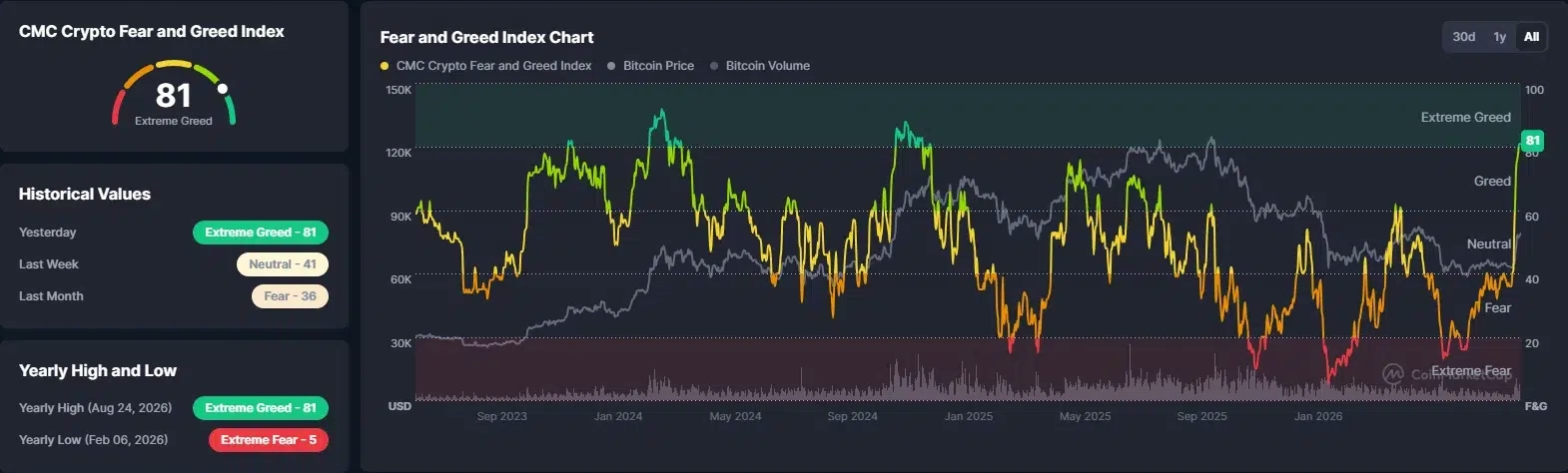
CoinMarketCap's Fear and Greed Index has surged to 81, a reading that places the market firmly in "extreme greed" territory for the first time in nearly two years. This dramatic shift occurred over just seven days, with the index climbing from 41 to 81—a remarkable 40-point jump that reflects the intensity of current market momentum.
To put this in perspective, the index stood at a mere 36 just one month prior, meaning the market has experienced a 45-point swing in a single month. This represents a complete reversal from the cautious sentiment that dominated much of the first half of 2026, when fear and uncertainty kept most participants on the sidelines.
Understanding What Extreme Greed Actually Means 🎯
In CoinMarketCap's classification system, extreme greed begins at the 80 threshold. While readings above this level indicate strong buying interest and heightened investor confidence, they also come with an important caveat: elevated sentiment often signals an overheated market vulnerable to sharp corrections.
The index isn't simply measuring price movements in isolation. Instead, it synthesizes five distinct data categories:
- Price momentum across the 10 largest non-stablecoin cryptocurrencies
- Volatility metrics tracking rapid price swings
- Derivatives activity including put-to-call ratios for Bitcoin and Ethereum options
- Market composition analyzing the distribution of value across asset classes
- Social engagement capturing platform-specific search trends and user activity
This multifaceted approach means the extreme greed reading reflects genuine shifts in market behavior rather than a single metric's fluctuation. Each component responds differently to changing conditions, providing a more comprehensive picture of investor psychology.
Bitcoin's Explosive Rally: The Catalyst Behind the Shift 💥
Bitcoin's performance has been the primary engine driving this sentiment transformation. The world's largest cryptocurrency gained approximately 24% over a single week, briefly surpassing the $80,000 mark for the first time since May 2026.
On August 25, Bitcoin traded near $79,000 after pulling back from an intraday peak around $81,255. This remarkable advance began when Bitcoin broke free from a consolidated trading range between $62,000 and $65,000 on August 19, establishing what many technical analysts consider a significant breakout pattern.
As Bitcoin climbed through $70,000, something crucial happened: traders holding leveraged short positions were forced to buy back their holdings to close losing trades. This created a cascade effect, with approximately $2.7 billion in bearish positions liquidated within 24 hours. More impressively, over $1 billion of Bitcoin short closures occurred within roughly one hour, representing about 92% of nearly $3 billion in total crypto liquidations across more than 172,000 traders.
Some estimates tracking the full two-to-three-day advance placed total short liquidations above $4 billion, demonstrating the sheer force behind this rally.
The Domino Effect Across the Broader Market 🌍
While Bitcoin stole the spotlight, the entire cryptocurrency market capitalization surged by 23.8% over the same seven-day period, reaching approximately $2.67 trillion. Despite this broad-based strength, Bitcoin maintained its dominance, accounting for roughly 59.7% of total market value—reinforcing its position as the sector's undisputed leader.
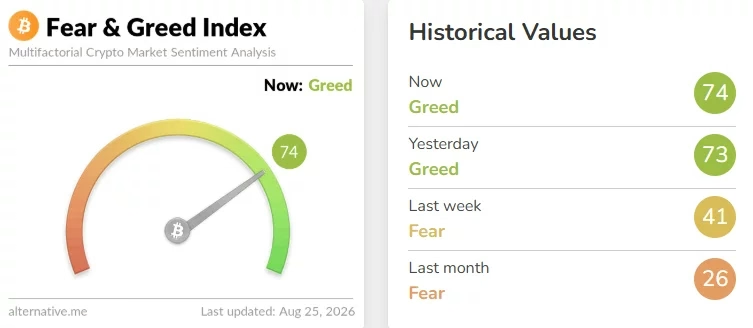
Alternatively, separate sentiment indices show variations in methodology. Alternative.me's Fear and Greed Index remains in greed territory, though with slightly different parameters, highlighting how different measurement approaches can yield nuanced results even when tracking the same market psychology.
The Macro Backdrop: Treasury Decisions and Easy Money 💰
While Bitcoin's technical breakout was dramatic, the broader financial environment provided crucial support. On August 19—the exact day Bitcoin initiated its breakout—the U.S. Treasury announced a significant expansion of its liquidity-support buyback program.
Effective September 9, the Treasury would at least double the maximum size of buyback operations for 10-to-20-year and 20-to-30-year securities, increasing the purchase cap from $2 billion to at least $4 billion per operation. Treasury officials framed this adjustment as necessary to improve liquidity in longer-dated government debt.
The market's interpretation was swift and decisive. Bond yields weakened considerably, with the 30-year Treasury yield falling from a 19-year high above 5.34% to approximately 5.19%. The 10-year yield declined to 4.647%. Meanwhile, the U.S. dollar weakened, and Bitcoin surged from an intraday low near $64,100 to roughly $69,500 within just 12 hours.
A Critical Distinction: Correlation vs. Causation 🔍
It's important to note that the Treasury buyback expansion doesn't technically take effect until September, meaning no expanded capital had actually entered markets during Bitcoin's initial breakout. Additionally, Treasury buybacks differ fundamentally from Federal Reserve quantitative easing—the Treasury funds purchases through debt issuance rather than creating new central-bank reserves.
However, market participants widely interpreted the announcement as signaling easier financial conditions ahead. Lower long-term yields typically encourage investors to allocate capital toward riskier assets like stocks, commodities, and cryptocurrencies. Yet this relationship isn't deterministic; Bitcoin remains exposed to sharp price swings even when macroeconomic conditions appear supportive.
ETF Demand: Institutional Money Flowing In 🏛️
The story becomes even more compelling when examining U.S. Bitcoin exchange-traded fund flows. After months of institutional hesitation—including $4.5 billion in June outflows from spot Bitcoin ETFs—demand has rebounded substantially.
This renewed institutional interest represents a significant shift from the pessimism that characterized much of mid-2026. When Bitcoin traded in the $58,000-$60,000 range just weeks earlier, sentiment readings languished in the low teens, and aggregate crypto open interest had plummeted from over $90 billion to approximately $44.5 billion.
The resurgence of ETF inflows suggests that institutional investors are regaining confidence in digital assets as legitimate portfolio components, not merely speculative vehicles.
Historical Context: From Extreme Fear to Extreme Greed 📈
The journey from February to August 2026 has been extraordinary. On February 5, CoinMarketCap's Fear and Greed Index hit 5—its lowest point of the entire year and a reading associated with extreme fear. The advance from 5 to 81 represents a complete transformation from the market's most bearish category to its most bullish one in less than seven months.
This dramatic swing underscores the volatile nature of cryptocurrency markets, where sentiment can shift rapidly based on technical developments, macroeconomic announcements, and shifts in institutional participation.
What Extreme Greed Means for Investors Going Forward ⚠️
While the surge to extreme greed readings reflects genuine bullish momentum, history suggests caution is warranted. Extreme readings in either direction often precede corrections or reversals. Markets reaching peak greed have frequently experienced pullbacks as profit-taking accelerates and speculative positions unwind.
Investors should consider several factors:
- Valuation concerns: Rapid price appreciation can create stretched valuations
- Liquidation dynamics: The $4+ billion in short liquidations may have temporarily exhausted bearish traders
- Macro sensitivity: Bitcoin remains highly responsive to changes in interest rates and dollar strength
- Regulatory risks: Ongoing policy discussions could impact sentiment quickly
The Road Ahead: Sustainability Questions 🛣️
The critical question now becomes whether this extreme greed is sustainable or represents a temporary euphoria. Several factors will likely determine the answer:
First, the actual implementation of Treasury buyback expansions in September could provide ongoing support for risk assets. Second, Bitcoin's ability to hold above key technical levels like $75,000 and $80,000 will signal whether institutional participation remains committed. Third, broader macroeconomic developments—particularly inflation data and Federal Reserve communications—will continue influencing sentiment.
The cryptocurrency market's evolution from extreme fear to extreme greed in less than seven months demonstrates both the sector's inherent volatility and the powerful impact of technical catalysts combined with improving macroeconomic conditions. Whether this represents a sustainable new uptrend or a temporary relief rally will become clearer in the coming weeks and months. 🎬✨
Key Takeaways 🌟
The crypto market's entry into extreme greed territory reflects genuine shifts in investor psychology and market structure. Bitcoin's 24% weekly surge, driven by short liquidations and improved macro conditions, has fundamentally altered sentiment. However, extreme readings—whether fear or greed—have historically preceded significant corrections. Investors should remain vigilant about valuation levels while acknowledging the strength of current momentum. The coming months will reveal whether institutional participation remains committed or whether profit-taking accelerates.
You May Also Like

Market Analysis
XRP Price Falls 5% as Leverage Hits Seven-Month High
August 26, 2026

Market Analysis
Ethereum Price Rally Overheats Below $2,550 Resistance
August 26, 2026

Market Analysis
Hyperliquid Price Rally: HYPE Targets $97 Amid $80 Support
August 25, 2026

Market Analysis
Bitcoin Price Dips Below $80K: RSI Signals Overbought Territory 📉
August 25, 2026