Category:
Market AnalysisGen Z Traders Push ETF Share to 25% on Binance

The cryptocurrency trading landscape is experiencing a fascinating generational shift 🌟. Recent data from Binance reveals that Generation Z traders are fundamentally reshaping how they allocate capital within equity markets, with exchange-traded funds capturing an increasingly significant portion of their trading activity. This trend signals a broader maturation in how younger investors approach portfolio construction and risk management in the digital asset space.
The Rising Tide of Gen Z ETF Adoption 📈
The numbers tell a compelling story about changing investment preferences among the youngest cohort of active traders. During July, exchange-traded funds captured 21.9% of Generation Z's net equity inflows on Binance, a notable increase from 18.5% the previous month. By early August, this figure climbed even further to 25% of total equity trading volume, representing a meaningful acceleration in just weeks.
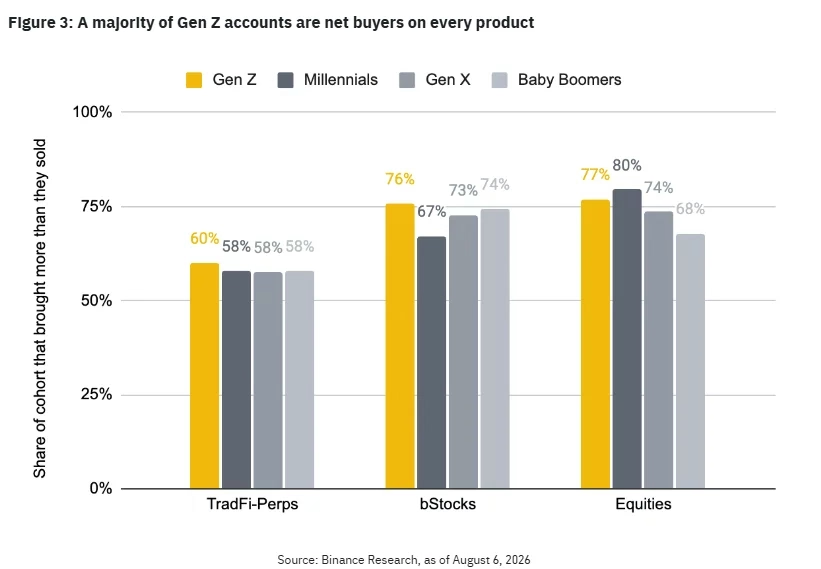
Simultaneously, the allocation toward individual stocks experienced a corresponding decline. In June, individual equities commanded 77% of Generation Z inflows, but this dropped to 74.2% by July. While the shift may appear modest in percentage terms, the trajectory suggests a fundamental recalibration in how younger traders think about diversification and portfolio construction.
Understanding the Generational Trading Patterns 🎯
Binance's comprehensive research examined trading behavior across multiple generations—Generation Z, Millennials, Generation X, and Baby Boomers—providing valuable insights into how age influences investment strategy. One striking finding emerged: Generation Z traders execute significantly fewer trades compared to their older counterparts.
Across traditional finance perpetuals, Generation Z users averaged just 13 trades monthly, substantially lower than Millennials at 17 and Generation X at 16.5. This pattern held consistent across other equity products studied, suggesting that younger traders may be adopting a more deliberate, less frenetic approach to markets.
The data becomes even more intriguing when examining sell-order patterns. Among Generation Z direct-equity accounts, 22% had never submitted a sell order—indicating either long-term conviction or recent market entry. For comparison, Generation X showed 19% buy-only accounts, while Baby Boomers recorded just 9%. Millennials, surprisingly, topped the list with 30% maintaining buy-only positions.
What Gen Z Is Actually Buying 💡
Within the buy-and-hold cohort, Generation Z traders demonstrated clear preferences. Broadcom, Tesla, and the Schwab U.S. Dividend Equity ETF ranked among the leading assets by cumulative purchases. This portfolio mix—combining technology giants with dividend-focused ETFs—reveals a nuanced investment philosophy that blends growth exposure with income generation.
The prominence of dividend-focused ETFs in Generation Z's portfolio deserves particular attention. This suggests younger traders aren't simply chasing volatility or speculative gains; instead, they're incorporating income-generating strategies typically associated with more conservative, mature investors. This represents a meaningful departure from the stereotype of Gen Z as exclusively growth-focused risk-takers.
The Leveraged ETF Paradox 🔄
Perhaps most revealing is Generation Z's minimal engagement with leveraged and inverse ETFs. Binance found that 88.2% of Generation Z perpetual accounts had never traded these complex products. This contrasts with Millennials at 84.5% and Generation X at 85.9%.
Leveraged ETFs seek to deliver multiples of an index's daily performance, while inverse funds provide exposure to falling markets. Both carry sophisticated risk profiles and require active management. The SEC has specifically warned that these products reset daily and can diverge significantly from underlying index performance over extended periods.
Generation Z's apparent wariness of these instruments could reflect several factors: enhanced risk awareness, product unfamiliarity, regulatory restrictions, or simply a preference for simpler, more transparent investment vehicles. The data doesn't definitively answer which explanation dominates, but the pattern is unmistakable.
The Tokenized Equities Revolution 🚀
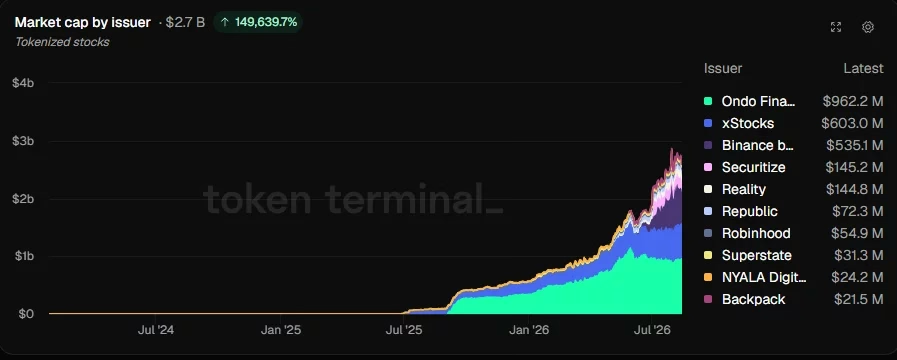
Binance's equity trading environment has expanded dramatically with the introduction of tokenized stocks and ETFs. The exchange launched bStocks in June, offering blockchain-based versions of major companies including Nvidia, Tesla, Circle, Micron, and SanDisk. These tokenized assets maintain one-to-one backing with underlying U.S. securities and can convert to direct stock positions without conversion fees.
During bStocks' first nine trading days, daily volume averaged approximately $143 million, with cumulative turnover exceeding $1 billion. Peak daily active traders reached 30,700, while total value locked approached $400 million. These metrics demonstrate substantial early demand for tokenized equity exposure on cryptocurrency platforms.
Crypto.com has similarly expanded its offerings, introducing tokenized derivatives tracking 1,500 U.S. stocks and ETFs for eligible users in approved markets. This proliferation of tokenized equity products reflects broader industry recognition that cryptocurrency users increasingly seek exposure to traditional financial assets.
Important Distinctions for Investors ⚠️
For U.S. investors, the regulatory distinction between conventional ETFs and blockchain-based equity products carries significant implications. Traditional ETFs registered with the SEC trade through regulated securities markets and provide direct ownership, voting privileges, and shareholder protections. Tokenized stocks and derivatives may only offer economic exposure to referenced assets without these legal rights.
The SEC has specifically cautioned that third-party stock tokens can carry different rights from conventional shares. Depending on legal structure, buyers may not receive direct ownership, voting privileges, or protections available to registered shareholders. Geographic restrictions also apply—some international tokenized-equity platforms prohibit U.S. persons from trading.
Interpreting the Data: Important Caveats 🔍
Binance emphasized a critical limitation in its analysis: the direct-equities product only reached meaningful scale in June, providing limited operating history for drawing definitive conclusions. This short timeframe raises important questions about whether observed patterns represent lasting behavioral trends or temporary fluctuations during an early adoption phase.
The exchange cautioned against treating these findings as definitive proof of generational investment philosophy. An account showing buy-only activity might reflect recent market entry rather than long-term conviction. Similarly, the relatively small sample size and concentrated user base on a single platform may not represent Generation Z traders broadly.
What This Means for Markets 📊
The shift toward ETF allocation among Generation Z traders carries broader implications for financial markets. Exchange-traded funds offer built-in diversification, lower fees, and simplified tax management compared to individual stock picking. If younger investors are genuinely embracing this approach, it could signal maturation in how new market participants approach portfolio construction.
The combination of lower trading frequency, higher ETF allocation, and buy-and-hold behavior suggests Generation Z may be developing more disciplined investment habits than stereotypes suggest. Rather than perpetually chasing short-term gains, this cohort appears increasingly interested in structured, diversified, long-term wealth accumulation.
Looking Ahead: Future Trends to Monitor 🌐
As cryptocurrency platforms continue expanding tokenized equity offerings, the intersection of crypto trading and traditional finance becomes increasingly significant. Generation Z's evolving preferences will likely influence product development, marketing strategies, and regulatory approaches across the industry.
The growing ETF allocation among younger traders also suggests potential demand for additional equity-linked products on crypto platforms. Platforms that successfully educate users about ETF benefits while offering seamless integration with cryptocurrency assets may capture disproportionate market share among this demographic.
Further research with larger sample sizes and extended time horizons will help distinguish genuine generational trends from early-stage adoption patterns. As these products mature and user bases expand, clearer pictures of sustained behavioral changes should emerge.
Key Takeaways 🎬
Generation Z traders on Binance are demonstrating a meaningful shift toward exchange-traded funds, with ETF share climbing from 21.9% in July to 25% by early August. This allocation change reflects a broader pattern of more deliberate, less frequent trading compared to older generations. The combination of lower trade frequency, higher ETF adoption, and concentrated buy-and-hold positions suggests younger investors are embracing more structured, diversified approaches to equity investing.
While the short operating history of Binance's equity products limits definitive conclusions, the emerging patterns challenge stereotypes about Generation Z as exclusively speculative traders. Instead, the data reveals a cohort increasingly interested in diversified, income-generating strategies alongside growth exposure. As cryptocurrency platforms continue expanding traditional finance offerings, monitoring how different generations allocate capital will provide valuable insights into the future of hybrid crypto-traditional finance ecosystems.
You May Also Like

Market Analysis
XRP Price Falls 5% as Leverage Hits Seven-Month High
August 26, 2026

Market Analysis
Crypto Market Hits Extreme Greed: What This Means for Bitcoin
August 26, 2026

Market Analysis
Ethereum Price Rally Overheats Below $2,550 Resistance
August 26, 2026

Market Analysis
Hyperliquid Price Rally: HYPE Targets $97 Amid $80 Support
August 25, 2026